Teeth Whitening Aftercare: The 48-Hour White Diet

HayatMed Clinic featured image titled "Teeth Whitening Aftercare: The 48-Hour White Diet" displaying a smiling woman holding a glass of water next to white diet foods including white rice, yogurt, oats, and cauliflower on a bright kitchen table

Written by: Zeyna Aslan, Medical Writer

Medically reviewed by: DMD. Necip Adil, Cosmetic and Implant Dentist

Last Updated: October 9, 2026
Published by: HayatMed Clinic, Istanbul. This guide is for general information and does not replace a consultation with a qualified clinician.

Professional teeth whitening can lighten natural tooth colour, and aftercare helps manage sensitivity and everyday staining habits. Some dentists suggest a 48-hour “white diet” as a precaution, but clinical reviews have not found that avoiding coloured foods is necessary to preserve the whitening effect. If your dentist gives you specific instructions, follow them for your treatment.

White rice and plain yoghurt are easy meal choices after whitening. Skinless poultry and white fish also fit a pale-food plan if your dentist recommends one.

The White Diet Aftercare Timeline
The White Diet Aftercare Timeline

HayatMed Clinic infographic outlining teeth whitening aftercare diet restrictions to avoid staining, including black drinks, pigmented fruits, dark sauces, acidic items, and tobacco products.

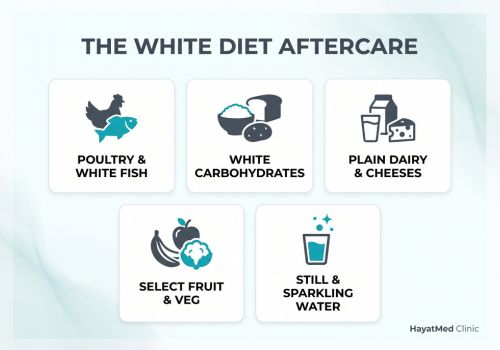
A dentist may recommend a non-pigmented diet for 48 hours after whitening. That is a precautionary approach, not a proven requirement for everyone: clinical studies comparing white and unrestricted diets found similar whitening results. These examples can help if you choose to follow the advice.

A helpful rule is to avoid any food that could stain a white fabric.

  • Skinless poultry and white fish
  • White rice, pasta, peeled potatoes, and white bread
  • Plain yoghurt, milk, and pale cheeses
  • Bananas, peeled apples, cauliflower, and celery
  • Still or sparkling water

Safe Local Foods for Travelling Patients

Patients spending 2 to 3 days in Istanbul may find familiar pale-coloured foods while travelling. The dishes below can fit a white-diet preference if ordered without dark sauces or seasonings; they do not guarantee a particular whitening result.

  • Ayran, a traditional plain yoghurt drink
  • Mild grilled chicken skewers without dark spices
  • Standard white rice pilaf
  • Flatbread topped exclusively with pale cheese

Dietary Restrictions and Staining Risks
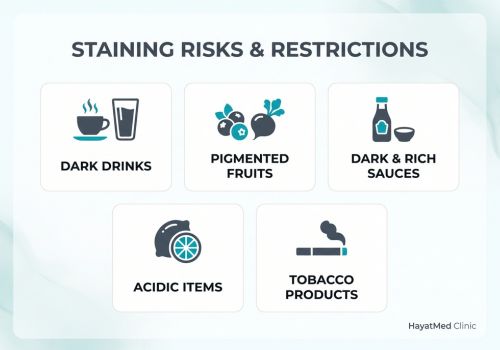
Infographic titled "Staining Risks & Restrictions" by HayatMed Clinic, displaying five categories to avoid after teeth whitening: Dark Drinks, Pigmented Fruits, Dark & Rich Sauces, Acidic Items, and Tobacco Products

HayatMed Clinic infographic outlining teeth whitening aftercare diet restrictions to avoid staining, including black drinks, pigmented fruits, dark sauces, acidic items, and tobacco products.

Dark foods and drinks can contribute to surface staining over time, but research has not shown that consuming them within the first 48 hours automatically reverses whitening results. If your dentist asks you to limit staining foods temporarily, the examples below are practical items to consider. Sensitivity, rather than colour alone, may influence your choice of acidic foods.

  • Black coffee, black tea, red wine, and dark sodas
  • Deeply coloured fruits like blueberries and beetroot
  • Rich sauces, including tomato, soy, and balsamic vinegar
  • Acidic items such as citrus fruits, which may increase temporary sensitivity
  • All tobacco products, as these rapidly stain porous enamel

Treatment Process and Package Details

International patients sometimes see advertised savings of up to 70 per cent on professional cosmetic dentistry when comparing countries, but the saving depends on the treatment and complete quotes. Treatments may be overseen by experienced clinicians, including those with up to 30 years in the field. Confirm the particular whitening method and any travel services in the written treatment plan.

  • Clinical application of high-concentration bleaching gels
  • Activation via professional laser light systems
  • Accommodation in local hotels for the duration of the stay
  • Airport transfers and bilingual coordinator support

frequently asked questions

Some dental practices advise waiting 1 to 2 hours before eating after whitening, while others give different instructions depending on the product used. Ask your treating dentist when to resume food and drink; water is generally the simplest choice if your mouth feels sensitive. If the dentist recommends a white diet for 48 hours, follow that advice, but the diet itself has not been shown to be essential for whitening efficacy.

If your dentist advises avoiding coffee for 48 hours, drinking it through a straw is not a substitute for that instruction. Clinical studies have not demonstrated that coffee during bleaching inevitably reduces whitening efficacy. After the initial two days, a reusable straw can help reduce direct contact with teeth, but regular oral care and your usual staining habits matter more for long-term surface stains.

Results from professional teeth whitening are often described as lasting from 6 months up to 3 years, although the duration varies widely.
Daily oral hygiene and habits such as tobacco use and coloured drink consumption influence surface staining. People who limit tobacco and staining drinks and maintain regular brushing, consistent with recognised whitening aftercare advice, may keep a lighter appearance for longer.

Mild tooth sensitivity can occur temporarily after whitening, as noted in common whitening safety guidance. Clinical supervision can help select a suitable whitening method, but it cannot guarantee the absence of complications. A toothpaste designed for sensitive teeth may help, and persistent or severe discomfort warrants dental advice.

Some international price comparisons advertise savings of up to 70 per cent on clinical teeth whitening costs, but actual savings vary by clinic and full quotation. HayatMed lists teeth whitening from €500; ask which services are included before comparing offers. Some clinics package accommodation and transfers with dental treatment, but do not assume these are part of a whitening quote.

Whitening can be planned alongside 1 or 2 other cosmetic procedures, such as dental veneers, where clinically appropriate.
However, bleaching does not change the colour of existing crowns, veneers, or fillings, as standard teeth whitening guidance explains. A dentist should plan the order and shade of any restorations rather than promising an exact colour match.

A dental holiday for whitening may involve a short visit of 2 to 3 days, depending on the appointment and travel arrangements. The procedure is usually outpatient.
Clinic-based whitening often takes less than 2 hours, in line with standard NHS teeth whitening guidance. Your dentist can confirm the treatment duration and any post-procedure instructions before your return journey.
Professional teeth whitening can improve the appearance of your smile, although outcomes and duration vary. A 48-hour white diet is one possible precaution, not a proven requirement for successful bleaching.
Sensitivity is usually temporary, but dental assessment and appropriate supervision are important. For a personalised assessment and a breakdown of potential costs, contact our medical coordination team.

Author picture

Medically reviewed by Necip Adil, DMD—member of TDB and the FDI World Dental Federation. A dental surgeon with 30+ years’ experience in implants, smile design, and cosmetic dentistry, he prioritises patient-centred care and natural, durable results.

About the author

Picture of Zeyna Aslan
Zeyna Aslan

Zeyna Aslan is a medical writer at HayatMed Clinic with 13 years of experience in healthcare content. She specialises in plastic surgery and hair-transplant topics, translating complex medical information into clear, patient-friendly guidance.

Linkedin

Related Articles

Call us WhatsApp