

A facelift in Turkey (rhytidectomy) repositions deeper facial tissue and trims excess skin to reduce jowls, define the jawline, and lift sagging cheeks; in 2026 it typically costs £4,500–£6,500, around 50–70% less than equivalent surgery in the UK, US, Canada, or Australia. Istanbul is a common destination for international facelift patients; facility standards and aftercare protocols vary, so patients should verify credentials and escalation pathways before booking.
Whether you’re searching for a facelift or face lift in Turkey, most patients from London, New York, Toronto, and Sydney stay 7–10 days. This guide covers costs, techniques, recovery timelines, and what to expect when travelling from your home country.
Facelift Cost Comparison 2026
Figures reflect typical HayatMed quotes and partner-hospital protocols, excluding potential extras such as revisions.
Price snapshot (from the table): Turkey full facelift £4,500–£6,500 and mini facelift £4,000–£5,000; UK full facelift £9,500–£15,000 and mini facelift £4,500–£8,500. US full facelift $12,000–$25,000+ and mini facelift $6,000–$10,000; Australia full facelift AU$20,000–AU$35,000 and mini facelift AU$10,000–AU$15,000. Notes in the table: deep-plane is often higher; request an itemised quote.
| Market | Full Facelift Package | Mini Facelift | Notes |
|---|---|---|---|
| Turkey | £4,500–£6,500 | $4,000–$5,000 (£3,300–£3,900) | Deep-plane often higher; request itemised quote |
| UK | £9,500–£15,000 | £4,500–£8,500 | Private sector; varies by surgeon |
| US | $12,000–$25,000+ | $6,000–$10,000 | Wide range by city and experience |
| Australia | AU$20,000–$35,000 | AU$10,000–$15,000 | Medicare does not cover cosmetic procedures |
Request itemised quotes with date-stamped pricing and clear revision policies. For a clearer overview, Hayatmed facelift techniques compares deep-plane, SMAS, and mini options.
Why Istanbul leads in facelift surgery for international patients
ISAPS publishes global statistics on aesthetic procedures; use those reports as context, and verify each clinic’s credentials, facility standards, and aftercare pathway. Country volumes and category breakdowns vary by year and by dataset; confirm any ranking or percentage claims directly in the underlying report before relying on them.
A facelift in Turkey is often quoted at lower total cost than some private-market quotes in the UK, US, Canada, or Australia; outcomes and safety depend on patient selection, surgeon training, facility protocols, and aftercare. Bundled care models, local cost structures, and high surgical volumes keep pricing competitive while maintaining quality.
What draws UK, US, Canadian, and Australian patients:
- Cost transparency: All-inclusive packages eliminate hidden fees common in fragmented Western pricing models
- Surgeon experience: Surgeon experience varies; ask how many facelifts your surgeon performs each year, how often they perform your chosen technique, and to see recent comparable cases
- Hospital standards: Some Istanbul facilities hold JCI accreditation; confirm that it is current and that the accredited facility is the one where your surgery and overnight care will take place
- Flight accessibility: Direct flights from London (4 hours), New York (10 hours), Toronto (10 hours), and Sydney (18 hours with one stop)
- Recovery climate: Healing is driven primarily by surgical technique, patient factors, and aftercare adherence; plan travel based on follow-up scheduling and your surgeon’s clearance
Most patients stay 7–10 days for surgery and their first follow-up. Verify what’s included before booking: accommodation, transfers, aftercare visits, translation services, and any revision terms.
What a facelift corrects: jawline, jowls, and mid-face

Rhytidectomy—the medical term for facelift surgery—repositions deeper facial tissue and trims excess skin to reduce jowls, define the jawline, and lift sagging cheeks. It will not alter the nose shape, forehead lift height, or eye position, which require separate procedures, such as rhinoplasty, brow lift, or blepharoplasty. The aim is to refresh your natural look, not erase facial character.
Realistic photo expectations: Professional before-and-after images use consistent lighting and angles. Expect a 7–12 year rewind in visible ageing, not a complete transformation.
Lighting, camera position, and expression heavily influence appearance—request unedited photo sets at Day 1, Week 2, Month 3, Month 6, and Year 1 to track true healing.
Travelling to Turkey from the UK, the US, Canada, and Australia
Detail UK US Canada Australia
Visa – – – e-Visa AU$85
Flight time 3h 45m–4h 15m 10–13 hours 10–12 hours 18 hours (1 stop)
Time difference +3 hours +7 to +10 hours +7 to +10 hours −7 to −8 hours
Peak months March–May, Sept–Nov Year-round April–June, Sept–Oct March–May
Flight booking advice: Book flexible tickets that allow date changes—your surgeon will confirm fit-to-fly status on Days 5–7, and minor delays occasionally occur. Flight policies and assistance options vary by airline and route; confirm current terms directly with your carrier before booking.
Who Should Delay or Avoid a Facelift
Postpone or skip surgery if you have:
- Uncontrolled high blood pressure or heart conditions—target BP typically <140/90 mmHg; may need cardiologist clearance
- Active nicotine use within 4–6 weeks raises skin-death risk substantially; quit smoking 4–6 weeks before to lower wound and anaesthesia complications.
- Bleeding disorders or blood-thinning medication—discuss safe pausing windows with your prescribing doctor
- Unrealistic goals, such as expecting celebrity looks or life-changing guarantees, signal poor candidacy.
Pre-Surgery Checklist
- Stop all nicotine (cigarettes, vapes, patches, gum) ≥4–6 weeks before
- Maintain blood pressure within the surgeon’s target range.
- List every medication, supplement, NSAID (aspirin, ibuprofen)
- Arrange a companion for the first 48 hours post-op.
- Confirm realistic expectations—refresh ageing, don’t halt it.
Rhytidectomy techniques: Deep-plane, SMAS, and mini facelift compared
Deep-Plane Facelift
- Best for: Moderate to severe mid-face sagging, heavy tissue, or repeat jowling after prior lift
- Method: Releases ligaments; lifts soft tissue as one unit for natural contour and robust mid-face support
- Longevity: Often 10–15 years; longer swelling; demands advanced skill
SMAS Facelift (Full/Standard)
- Best for: Moderate jawline and cheek laxity with decent skin quality
- Method: Tightens the SMAS (superficial musculoaponeurotic system) layer beneath the skin, versatile and widely used
- Longevity: Typically 8–10 years; faster recovery than deep-plane
Mini Facelift (Short-Scar)
- Best for: Early jowls, mild lower-face laxity, or touch-up after previous full lift
- Method: Shorter incisions, limited dissection
- Longevity: 4–7 years; quickest return to daily routine
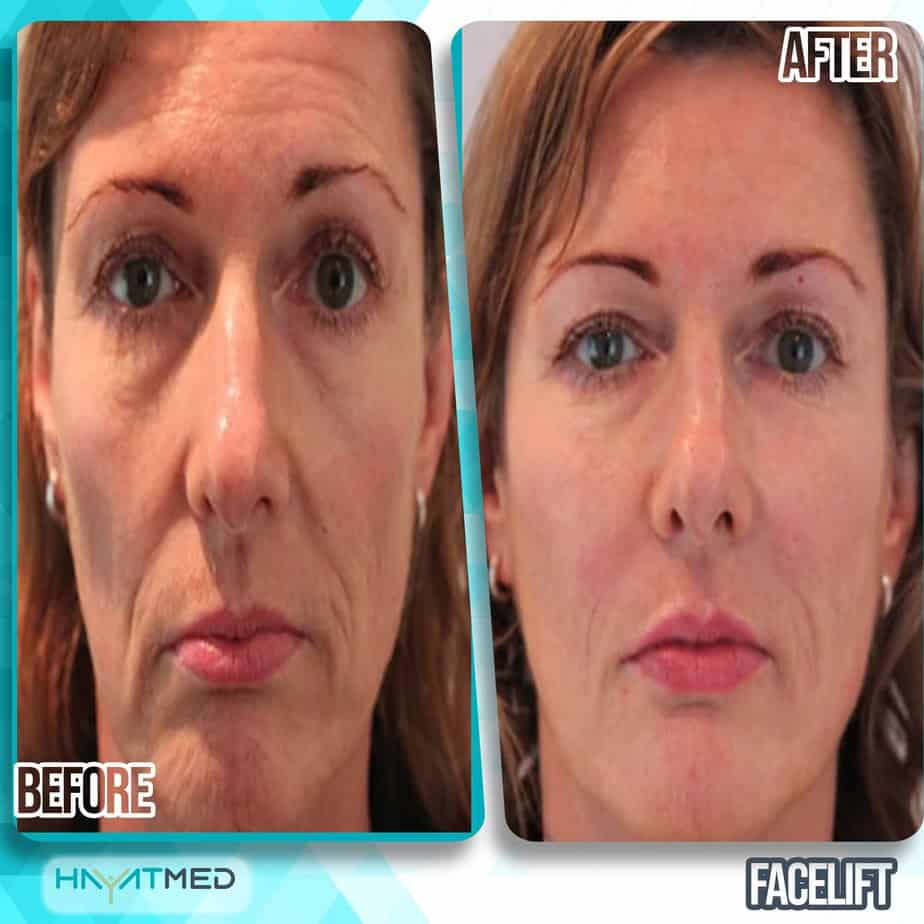


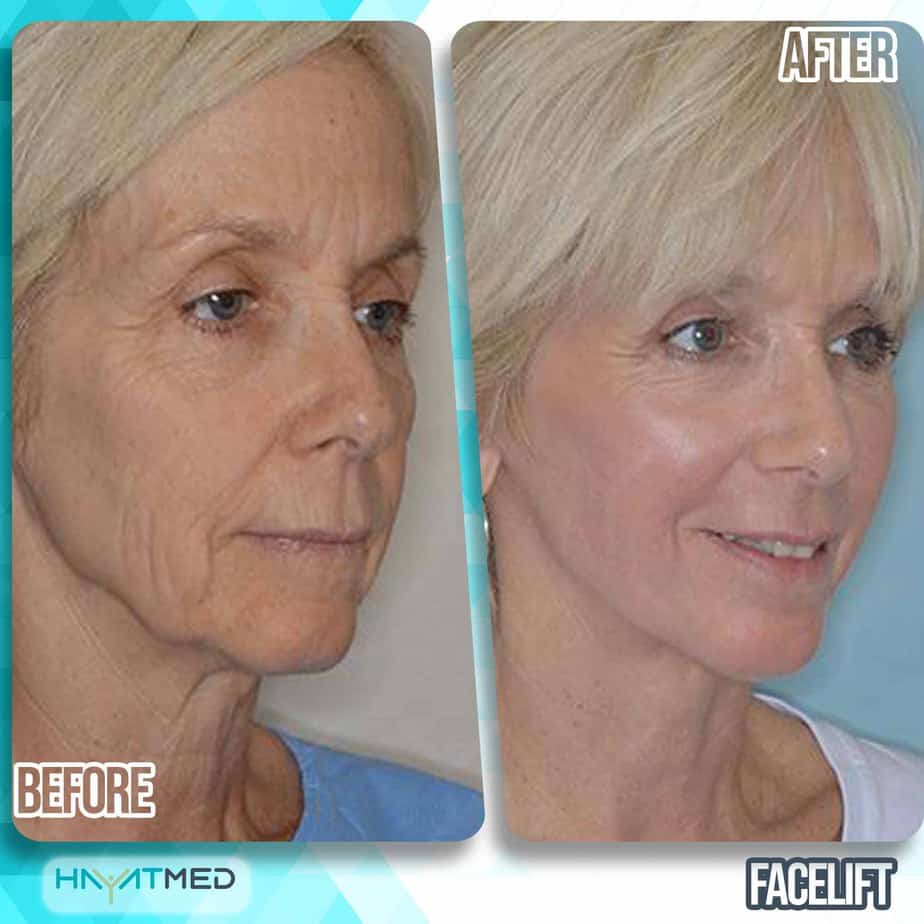

Incision Placement and Scar Evolution
Standard incisions curve around the ear (front or back, depending on the method) and extend into the hairline at the temples. The final scar visibility depends on factors such as skin type, genetics, sun exposure habits, and surgical precision.
Colour timeline: New incisions look pink or red, fading to light pink by Month 3, then pale or barely visible by Months 6–12. Darker skin may show temporary darker patches that resolve with sun protection and prescribed creams.
Scar Care Basics
- Keep sites clean and dry according to instructions; do not soak until cleared.
- Apply SPF 50+ sunscreen daily once the wounds have closed (usually by Week 2–3).
- Use silicone gel or sheets, as advised, starting in Week 3–4.
- Avoid direct sun, tanning beds, and harsh scrubs for at least 3 months.
Surgery Day to Day-7 Follow-Up
- Pre-op review: Surgeon checks medical history, current meds, smoking status; takes standard photos; finalises plan
- Procedure: Under general anaesthesia, incisions are made around the ear and hairline. Small drains may go in briefly. Most patients stay overnight for observation; some mini-lift patients go home the same day if they are stable.
- In-country check: Wound inspection typically occurs around Day 5–7; stitches are removed according to protocol; fit-to-fly clearance is typically granted between Day 7–8 if healing is progressing as expected.
Anaesthesia and Safety Measures

- General anaesthesia is routine, managed by a qualified anaesthetist or anesthesiologist for the 2–4 hour operation. Overnight hospital stay lets staff monitor vitals, control pain, and watch for early bleeding under the skin—though low-risk mini-lift cases may discharge the same day.
- Monitoring and clot prevention: Pulse, blood pressure, and heart rate were continuously tracked during surgery. Leg compression sleeves reduce the risk of clotting; short walks can begin within hours of waking, which are key steps in preventing hospital-associated blood clots. Clots are rare but serious—prevention includes compression, early movement, hydration, and medication when needed.
- Drains: Thin suction tubes placed under the skin help remove fluid after surgery—see the Jackson-Pratt surgical drains overview. Removal timing depends on the output and the surgeon’s protocol. Early removal reduces the risk of infection and discomfort.
Facelift recovery timeline and flight clearance
Technique Longevity Socially Presentable Main Trade-Off
Deep-plane 10–15 years Weeks 2–3 Longer swelling, advanced skill required
SMAS 8–10 years Weeks 2–3 Less effective for deep mid-face laxity
Mini 4–7 years Days 10–14 Limited correction
Critical tip: No nicotine, no NSAIDs (unless approved), strict wound care routine.
Facelift risks and complication rates

In suitable patients at accredited centres, serious issues are uncommon. Your surgeon assesses your personal risk based on your health, habits, and anatomy.
Expected (temporary): Bruising, swelling, numbness, tightness; see facelift risks and safety (ASPS) for a full list reviewed by the speciality society.
Less common:
- Hematoma blood pooling under the skin needing drainage, usually within the first 48 hours; meta-analysis shows hematoma rates by technique of ~2–3% across SMAS vs deep-plane cohorts
- Temporary nerve weakness (1–3%)—trouble raising brow or smiling evenly; typically resolves in 3–6 months; permanent injury <0.5% with experienced surgeons
- Infection (<1%) and poor scarring (varies by genetics and aftercare)
Figures reflect surgeon logs and post-op audits at accredited hospitals. Discuss your smoking, BP, meds, and how the team mitigates your specific risks.
Turkey facelift packages and 2026 pricing
Turkey full-facelift packages typically span $4,100–$7,600 (£3,200–£5,900 / CA$5,700–$10,600 / AU$6,300–$11,700) as. Mini lifts usually cost less, while deep-plane lifts are often priced higher due to longer operative time and greater technical demands.
Standard Package Includes
- Hospital fees, anaesthesia, operating room
- 1 night hospital stay (when indicated)
- Hotel stay (3–7 nights)
- Airport transfers
- Translation services
- Day 5–7 wound check
Always request itemised, date-stamped quotes. Confirm aftercare schedule, remote photo reviews, and any revision policy (often within 6–12 months).
Facelift recovery milestones and how Turkey compares to other facelift destinations
Timeline What Happens Activity Level
Days 1–3 Peak swelling and bruising Head elevated 30–45°; short walks every 2–3 hours
Days 4–7 Bruising fades; lighter swelling Clinic check-up; stitch removal; fit-to-fly Day 7–8
Days 8–14 Visible swelling settles Return to desk work
Weeks 3–6 Significant swelling reduction Light exercise; high-impact waits until Week 6+
Months 3–6 Scars soften; contour refines Final refinement continues up to 12 months
Why do patients choose Turkey over Thailand or Mexico?
- Shorter travel time from Europe and the East Coast of North America
- Higher concentration of facial surgery specialists (vs body-focused clinics)
- Established medical tourism infrastructure with English-speaking coordinators
- Cultural familiarity for Western patients (European-influenced hospitality)
How Long Results Last and How to Extend Them
Technique Typical Duration
Deep-plane 10–15 years
SMAS 8–10 years
Mini 4–7 years
Factors That Shorten Longevity
- Weight swings ±10% body weight
- Smoking—speeds collagen breakdown
- Unprotected sun—degrades elastin and collagen.
- Genetics and natural ageing continue.
Factors That Extend Longevity
- Daily SPF 50+ sunscreen
- Stable weight
- No smoking
- Medical-grade skin care (retinoids, antioxidants, growth factors)
Maintenance Timeline
- Months 3–6: Restart retinoids, professional facials once cleared
- Years 1–3: Consider radiofrequency or ultrasound tightening if mild loosening appears
- Years 5–10: Minor touch-ups (mini lift, threads, fat grafting) instead of a full redo
- Year 10+: Full revision if needed; many deep-plane patients wait 15+ years
Non-Surgical Add-Ons and Safe Timing
What Pairs Well
- Botulinum toxin (Botox, Dysport)—relaxes forehead and crow’s-feet lines; lifting doesn’t fix. Resume 2–4 weeks post-op once swelling drops and injection sites are safe.
- Dermal fillers—restore mid-face or lip volume. Wait 4–6 weeks so swelling clears and volume needs are accurate.
- Skin resurfacing (laser, peel, microneedling)—improves texture, pigment, and fine lines. Best done 4–6 weeks before surgery (full healing before incisions) or 3–6 months after (once flap blood flow is stable and scars mature).
Why Timing Matters
- Too-soon injections risk distorting healing tissue or introducing infection.
- Aggressive resurfacing before surgery can starve the flap of blood; resurfacing too early after surgery raises the risk of skin death in low-flow zones.
- Proper intervals protect both surgical and non-surgical outcomes.
Sequencing tip: Apply a facelift first, then layer non-invasive treatments once the surgical foundation is stable.
When to Combine Neck Lift or Eyelid Surgery
Neck lift: Add if muscle bands or loose skin extend below the jaw. Combining a facelift with a neck lift or blepharoplasty avoids a face-neck mismatch but adds approximately $1,500–$3,000 (£1,200–£2,300) and operative time. See our neck lift cost guide.
Blepharoplasty or brow lift: Consider if droopy eyelids or sagging brows dominate the “tired” look. Combining shortens the total recovery time compared to staging months apart and delivers better overall harmony.
Good candidate profile for facelift in Turkey
The best outcomes occur in healthy non-smokers (or those who have quit as advised), with a stable weight, and realistic goals. A facelift resets visible ageing ~7–12 years but doesn’t stop the clock—skin continues to age at its natural rate. Safeguard your results with sun protection, weight management, and maintenance treatments recommended by your surgeon.
Verifying clinic credentials in Istanbul
Look for:
- JCI-accredited hospital or equivalent national standard
- Surgeon volume: ≥50 facelifts per year
- Anaesthesia team: Board-certified with advanced cardiac life support training
- 24-hour emergency protocols and ICU access
Aftercare Schedule
Confirm structured plan: In-country wound check, Days 5–7; remote follow-ups, Weeks 2, 3, and 6. Ask how post-discharge issues are handled, including 24-hour contact, telemedicine access, and revision terms (if needed within 6–12 months: included or extra cost?). Request unedited before-and-after photos at standard intervals under consistent lighting.
What to verify about your Turkish facelift surgeon
Choosing a facelift surgeon in Istanbul requires more than checking board certification—it also requires verifying facial surgery expertise. Request these credentials before booking:
- Turkish Medical Association registration: All practising surgeons must hold current registration—ask for the registration number
- Plastic surgery specialisation: Confirm training specifically in plastic and reconstructive surgery, not general surgery with cosmetic add-ons
- ISAPS or EBOPRAS membership: International Society of Aesthetic Plastic Surgery or European Board indicates peer-recognised expertise
- Facelift-specific volume: Ask how many facelifts (not total procedures) the surgeon performs annually—50+ suggests strong experience, 100+ indicates high-volume specialist
- Deep-plane certification: If considering the deep-plane technique, verify specific training—this advanced method requires additional fellowship or mentorship beyond standard residency
- Before-and-after portfolio: Request 20+ facelift cases with consistent lighting, angles, and timestamps at Day 1, Month 3, Month 6, and Year 1
HayatMed surgeon standards: Our facial surgery team includes ISAPS members with 10–20 years of dedicated cosmetic experience, performing 80–150 facelifts annually at JCI-accredited hospitals in Istanbul.
Travel Packing Checklist

Documents:
- Passport, travel insurance (covers complications), itemised quote/receipt, surgeon contact, pre-op clearance copy
Medications:
- Prescribed pre-op drugs, personal prescriptions (labelled bottles), paracetamol/acetaminophen (skip NSAIDs unless approved)
Comfort items:
- Button-front or zip-front shirts, travel pillow for head elevation, reusable cold packs
Wound care:
- Sterile gauze, prescribed ointments, gentle cleanser, SPF 50+ sunscreen (start Week 2–3 once wounds close)
Logistics:
- Confirm Day 5–7 follow-up date/location before departure; save the clinic’s 24-hour emergency number.
Skip overpacking—clinics provide initial wound care, and hotels offer laundry services for longer stays.


Mini Facelift in Turkey: Costs, Recovery, and What to Expect
A mini facelift in Turkey typically costs €4,500–€6,000. Prices in Turkey are often lower than quotes in the UK or

Deep Plane vs SMAS vs Mini Facelift in Turkey: Which Technique Delivers the Best Value in 2026?
Disclosure: HayatMed coordinates care with JCI-accredited partner hospitals in Istanbul. This guide provides independent clinical information to support informed decision-making.

Deep plane facelift in Turkey: 2026 cost, recovery and results
Disclosure: This article is provided by a clinic that offers deep-plane facelift packages in Turkey. Independent, board-certified surgeons at partner