
What is Botox and how does it work for wrinkles?
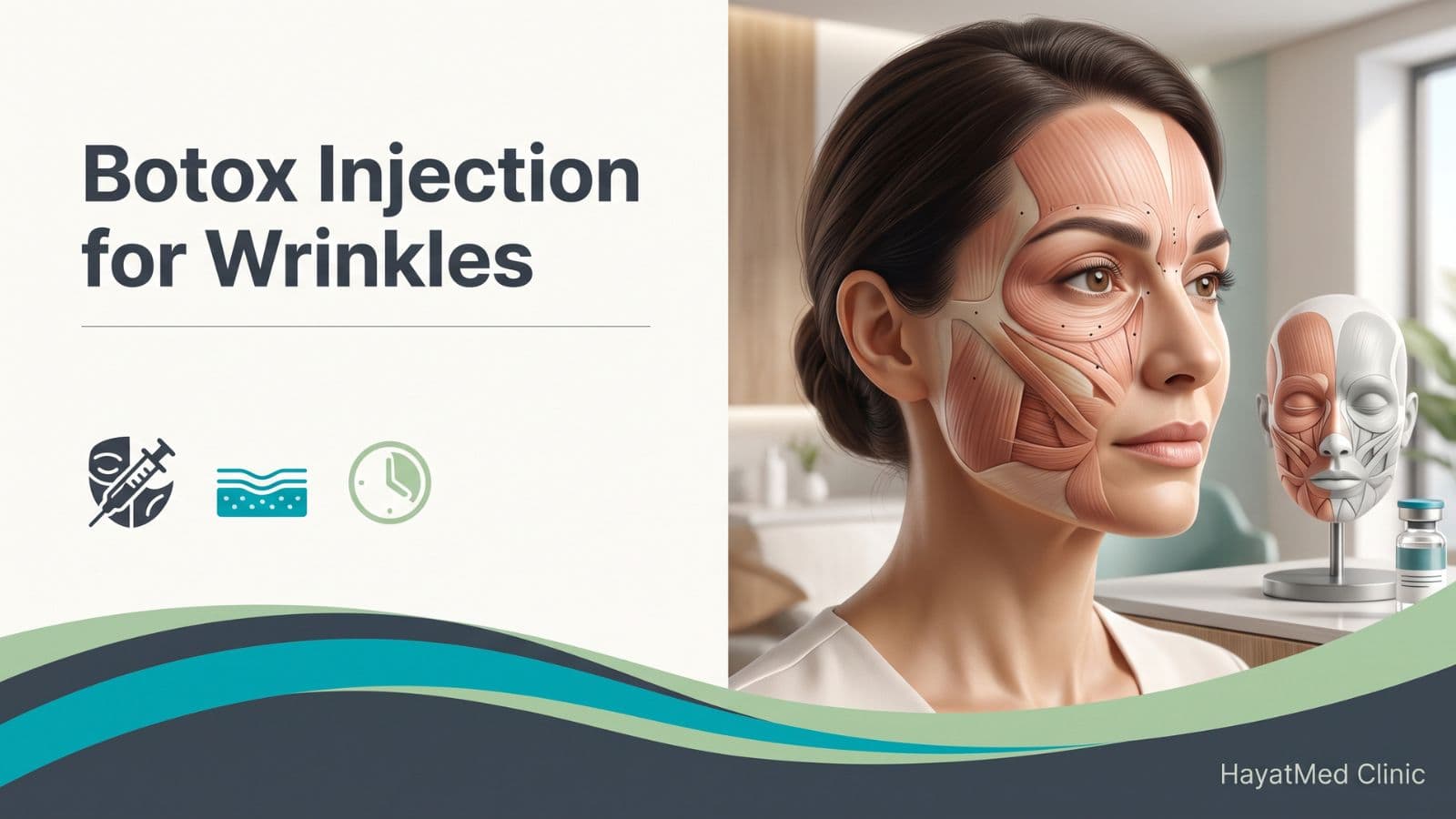
Botox is a brand name for onabotulinumtoxinA, one of several botulinum toxin products used in medicine. In cosmetic treatment, small amounts are injected into selected facial muscles to temporarily reduce the nerve signals that make those muscles contract. When the targeted muscle activity decreases, dynamic wrinkles caused by repeated expressions can look softer.
Botulinum toxin is most commonly used for expression lines such as frown lines between the eyebrows, forehead lines and crow’s feet. It does not add volume to the face, and it does not treat every type of wrinkle. Lines that remain visible when the face is at rest, skin laxity and volume loss may need a different or combined treatment approach.
The effect is temporary. The aim is not to freeze every facial movement, but to reduce selected muscle activity while maintaining a natural expression. The appropriate injection pattern and dose depend on facial anatomy, muscle strength and the area being treated.
Who may be suitable for facial Botox injections?
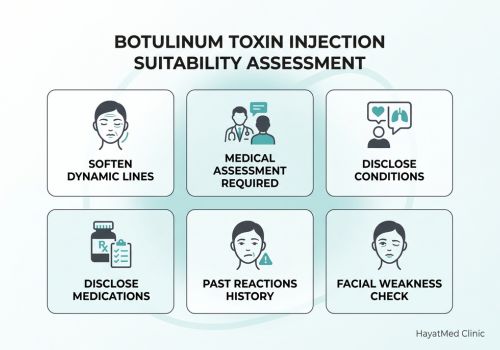
Adults who want to soften dynamic facial lines may be suitable for cosmetic botulinum toxin injections, but suitability should be decided after a medical assessment rather than by age alone.
Before treatment, tell your clinician about:
- your medical conditions and medication allergies;
- all prescription and non-prescription medicines, vitamins and supplements you take;
- any previous reaction to a botulinum toxin product;
- previous Botox, filler, laser, facial surgery or other facial procedures;
- pregnancy, plans for pregnancy or breastfeeding; and
- eyelid or brow drooping, facial weakness or asymmetry.
Treatment may be unsuitable or require additional caution if you have an infection at the planned injection site, a known allergy to a botulinum toxin product or one of its ingredients, certain conditions affecting nerves or muscles, or previous problems with swallowing or breathing.
If you are pregnant, planning a pregnancy or breastfeeding, tell your clinician before considering cosmetic botulinum toxin treatment. Because safety information in these situations is limited, cosmetic treatment is generally deferred during pregnancy or breastfeeding.
What happens during a Botox consultation?
A consultation should establish what is causing the lines you want to treat and whether botulinum toxin is likely to address them. Your clinician should review your medical history, medicines and supplements, previous injectable treatments and any facial surgery or procedures.
The face is then assessed at rest and during movement. This helps identify which muscles are contributing to the wrinkles and whether relaxing them could create an unwanted change in brow position, eyelid position or facial expression.
Use the consultation to ask:
- what product will be used;
- who will perform the injections;
- which areas are being treated;
- what result is realistic;
- what side effects are possible;
- what aftercare is recommended; and
- what the quoted price includes.
Do not change or stop prescribed medicines, including blood thinners, without guidance from the clinician who manages those medicines.
What happens during Botox injections?
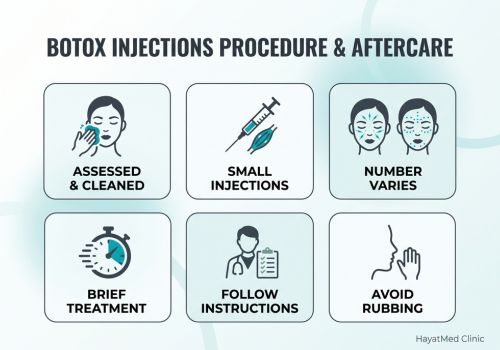
The treatment is usually performed as an outpatient procedure. After the planned areas are assessed and cleaned, the clinician uses a fine needle to place small injections into selected muscles. The number and location of injections vary according to the treatment area, facial anatomy and treatment plan.
General anesthesia is not normally required for cosmetic facial injections. Some people choose topical numbing, while others need no numbing at all. The injections themselves are brief, and most people can return to normal daily activities soon afterward.
After treatment, follow the specific instructions given by your clinician. Avoid rubbing or massaging the treated areas because this may increase the chance of affecting nearby muscles. Advice about exercise, lying down, makeup and other activities can vary, so follow the instructions provided for your treatment rather than relying on a generic aftercare rule.
Are Botox injections painful?
Most people describe the injections as brief pinpricks or stinging rather than significant pain. Discomfort depends on the treatment area and individual sensitivity. A topical numbing cream or other comfort measures may be used when appropriate.
Mild tenderness, redness or swelling can occur at injection points and usually settles without a prolonged recovery period. If discomfort is severe, worsening or accompanied by other concerning symptoms, contact your treating clinician.
What are the possible side effects and risks?
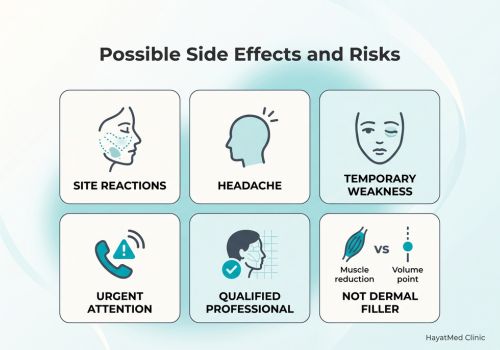
Temporary side effects can include:
- pain or tenderness at the injection site;
- redness, swelling or bruising;
- headache; and
- temporary weakness of a nearby muscle, which can cause eyelid or brow drooping or facial asymmetry depending on the injection area.
More serious reactions are uncommon, but botulinum toxin products carry warnings about effects spreading beyond the injection area. Seek urgent medical attention if you develop difficulty breathing, swallowing or speaking, marked generalized weakness, or other severe symptoms after treatment.
You can reduce avoidable risk by choosing an appropriately qualified medical professional who understands facial anatomy and by giving a complete medical and medication history. The clinician should also use a legitimate product from an appropriate medical supply chain and explain what to do if a complication occurs.
Botox should not be treated as interchangeable with dermal filler. Botulinum toxin reduces selected muscle activity; filler adds volume or structural support. If volume loss or a static crease is the main concern, ask whether a different treatment would better match the problem.
When do Botox results appear, and how long do they last?
Changes usually begin to appear within several days, with the effect continuing to develop over roughly one to two weeks. The final appearance depends on the product, dose, treatment area, muscle strength and individual response.
For facial wrinkles, the cosmetic effect commonly lasts around three to four months, although duration varies. Muscle activity gradually returns as the effect wears off, and expression lines may become visible again. Repeat treatment is optional and should be based on your goals, response to the previous session and clinical advice.
Botox is not a permanent wrinkle treatment. If you decide not to repeat it, the temporary effect wears off; treatment does not need to be continued indefinitely.
What affects the cost of Botox injections?
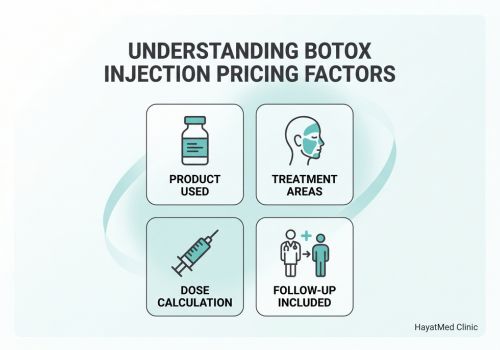
There is no single Botox price that applies to every patient. The cost depends on the areas being treated, the amount of product required, the product used, the clinician’s assessment and what is included in the appointment or follow-up.
Before accepting a quote, ask:
- whether the price covers one area or several areas;
- how the treatment amount is determined;
- which product is planned;
- whether follow-up is included; and
- whether any additional charge could apply.
A lower headline price is not enough to judge treatment quality or safety.
If you are considering Botox in Turkey, keep the same priorities you would use elsewhere: verify the clinician’s qualifications, ask which product is being used, understand the proposed treatment areas and dose, and obtain a clear quote before treatment. Travel convenience or price should not replace an appropriate medical assessment.
You can use HayatMed’s Contact page to discuss your goals, ask what information is needed for an initial review and request current treatment and pricing information before making travel plans.
How to decide whether Botox is right for you
Botox can be a useful option when the main concern is a dynamic wrinkle caused by repeated muscle movement and you want a temporary, non-surgical treatment. It may be less suitable when the main issue is volume loss, skin laxity or a deep line that remains at rest.
Before deciding, be clear about the area that bothers you, your previous injectable or facial treatments, your medicines and medical conditions, and the type of result you want. A clinician can then assess whether botulinum toxin fits that goal, explain realistic limitations and discuss alternatives when another treatment would better match the problem.
For an initial HayatMed review, use the Contact page to send your details and questions. You can also return to the Injectables category to compare the roles of other injectable treatments.


Blepharoplasty Turkey Package Prices: Your 2026 Cost Guide
Blepharoplasty Turkey package prices typically range from $1,600 to $3,500 for all-inclusive care, covering surgery, hotel, transfers, and aftercare. This

Fox Eye Surgery in Turkey: 2026 Cost, Procedure & Recovery Timeline
Fox eye surgery in Turkey typically costs $2,200–$3,000 and involves lifting the outer corners of the eyes to create an

Chin Augmentation in Turkey: Implants, Genioplasty, and Cost (2026)
Facial balance relies on the relationship between the nose, jawline, and chin. In patients with a weak or recessed chin,