
Quick answer
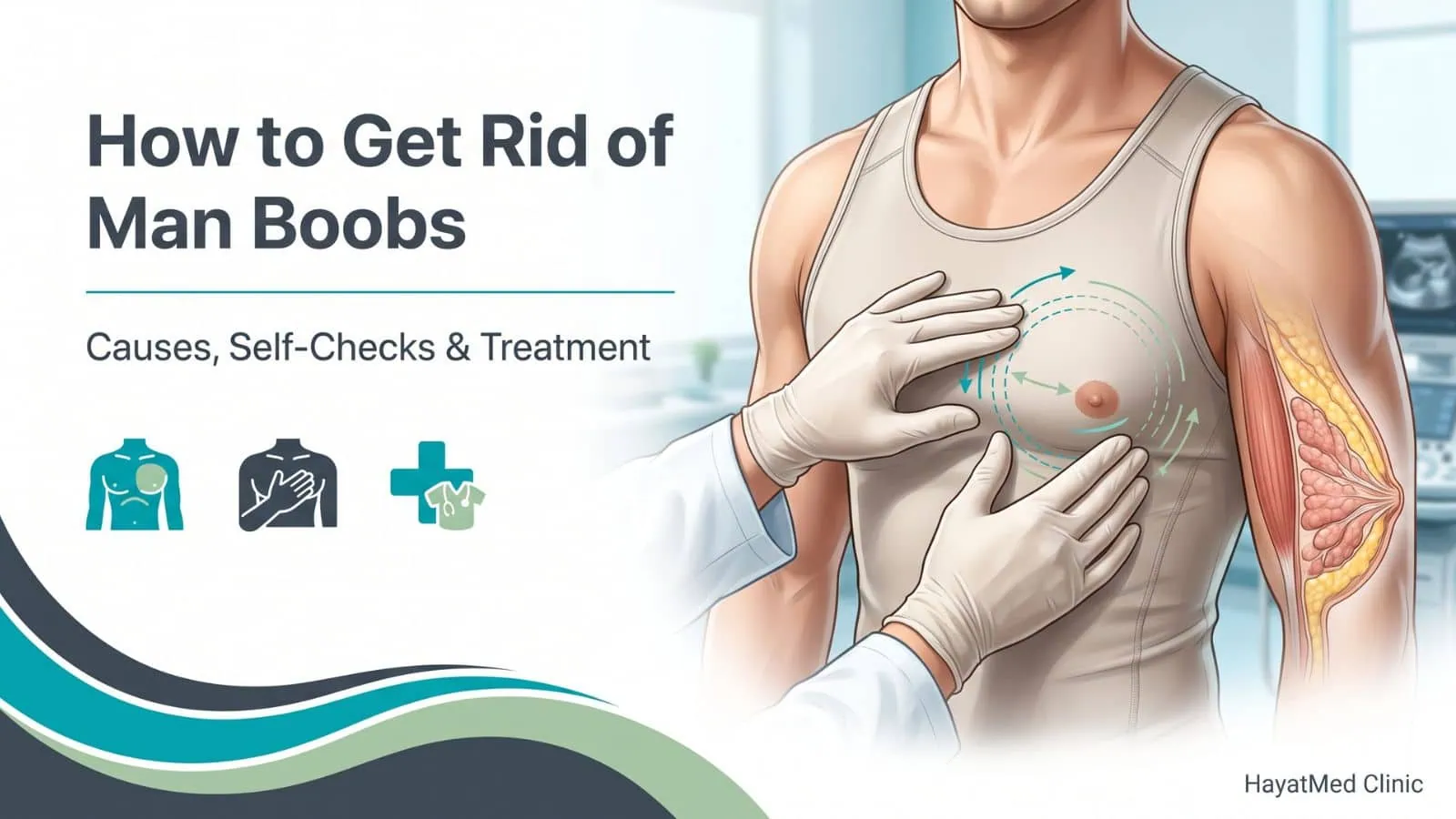
Man boobs can be caused by extra chest fat, enlarged breast gland tissue (gynecomastia), or both. The effective way to reduce them depends on the cause.
If extra fat is the main problem, gradual overall weight loss and strength training may reduce chest size. Push-ups alone cannot remove gland tissue.
If a firm area persists behind the nipple, the chest changes rapidly, or there is discharge or a new lump, arrange a medical assessment rather than relying on exercise alone.
How to Get Rid of Man Boobs: 5 Practical Steps
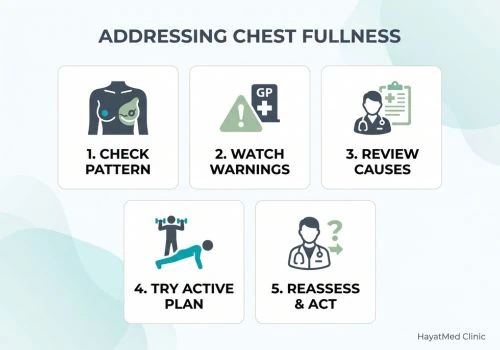
The first step is to work out whether chest fullness is mainly fat, gland tissue, or a mixture.
Then choose an approach that addresses the cause rather than promising to burn fat from one body part.
- Check the overall pattern. Notice whether the whole chest feels soft or whether there is firmer tissue centred behind the nipple.
- Look for warning signs. Arrange a GP appointment for a new lump, persistent pain, nipple discharge or bleeding, skin changes, or rapid growth; do not postpone assessment for a fitness trial.
- Review possible causes. A clinician can assess weight change, puberty or ageing, medicines, hormone-related symptoms, and relevant health conditions. Do not stop prescribed medicine without medical advice.
- If excess fat is likely and weight loss is appropriate, try a sustainable plan. For adults aged 19–64, the NHS recommends at least 150 minutes of moderate activity or 75 minutes of vigorous activity per week, plus strengthening all major muscle groups on at least 2 days a week; useful activities include push-ups, bench presses, rows and brisk walking.
- Reassess the chest and choose the next step. If the chest becomes smaller with overall fat loss, fat was likely contributing. If gland-like fullness persists, ask a clinician whether observation, treatment of an underlying cause, or surgery is appropriate.
What Causes Man Boobs: Chest Fat, Gland Tissue, or Both?
There are 3 useful patterns: predominantly fat, predominantly gland tissue, and a mixture. Their appearance can overlap, so a clinician may need to examine the chest before deciding which treatment will help.
Chest enlargement pattern What you may notice What may help first
Pseudogynecomastia (mostly fat) A softer, more even fullness across the chest Overall fat loss if weight reduction is appropriate; strength training may improve chest shape
True gynecomastia (gland tissue) Firmer or rubbery tissue centred beneath the nipple; sometimes tenderness Evaluation of possible causes, observation or medical treatment when suitable; persistent cases may need surgery
Mixed fat and gland General chest fullness plus a protruding or puffy nipple area Weight management may reduce the fat component; gland tissue may remain and need assessment
Fat tissue can decrease with weight loss, but exercise does not reliably shrink enlarged breast glands. In a multicentre surgical study, the authors reported that, in their experience, gland-only gynecomastia was relatively rare and mixed fat-and-gland enlargement was more common. Older medical literature has estimated gynecomastia in 24% to 65% of men aged 50 to 80, although the range depends strongly on how it was defined and which men were studied. A peer-reviewed clinical review of gynecomastia discusses that prevalence and the distinction between fat and gland enlargement.
How Can You Tell Whether It Is Chest Fat or Gynecomastia?
A simple 4-part self-check may help you describe texture, tenderness, shape, and symmetry to a doctor.
- Texture: Soft, diffuse fullness may be mostly fat; a firmer, rubbery area directly under the nipple may suggest gland tissue.
- Tenderness: Enlarged gland tissue may feel tender, while fatty fullness is often less tender.
- Shape: A broad chest contour can suggest fat; a prominent areola or puffy nipple can accompany gland enlargement.
- Symmetry: Either side or both sides can be affected by gynecomastia; clinical information on gynecomastia describes unilateral and bilateral presentations.
A firm lump away from the nipple, new skin changes, or discharge warrants prompt GP review. A clinician may use an examination and, when indicated, tests to investigate unclear findings.
Can Diet, Push-Ups, and Exercise Reduce Man Boobs?
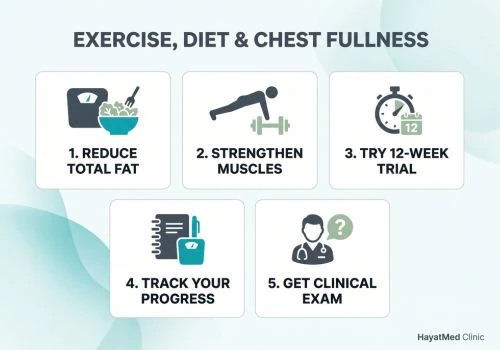
Diet and exercise can reduce chest fullness when excess body fat contributes to it. Chest exercises develop the pectoral muscles, but they do not selectively burn breast fat or remove enlarged gland tissue.
A sustainable calorie deficit can help with general fat loss if weight reduction is medically appropriate. For adults aged 19–64, the NHS physical activity guideline recommends at least 150 minutes of moderate activity or 75 minutes of vigorous activity per week, plus muscle strengthening on at least 2 days a week; the NHS also recommends spreading activity across 4 to 5 days or every day. Push-ups, bench presses and rows can strengthen muscles, while brisk walking provides moderate aerobic activity. Harvard Health Publishing explains why exercising a particular area does not selectively remove its fat.
A 12-week lifestyle trial can be a practical tracking period. Record changes in weight and chest appearance, choose habits you can maintain, and arrange assessment sooner if you have symptoms or concerns.
For adults who are overweight, the NHS describes gradual weight reduction of around 0.5–1 kg per week as a general target; an individual plan may differ. A consistent 8–12-week period may show whether overall fat loss changes the chest. If chest fullness persists after 12 weeks despite weight reduction, a clinical examination can clarify what remains.
Do Man Boobs Go Away During Puberty or in Adulthood?
Breast enlargement during puberty often improves without surgery, commonly over 6 months to 2 years. New or persistent enlargement in adulthood deserves a review of possible causes, especially if symptoms have changed.
During puberty, temporary hormone fluctuations can enlarge breast tissue. Mayo Clinic notes that pubertal gynecomastia often resolves within 2 years and that healthcare teams may arrange checks every 3–6 months rather than moving immediately to surgery.
Adult gynecomastia can persist from adolescence into the 20s or develop later. Enlargement that has lasted more than 12 months is less likely to settle rapidly than a recent pubertal change. A clinician can assess whether a medicine, hormone issue, or other condition needs attention.
Can Alcohol or Hormones Cause Puffy Nipples?
Puffy nipples can result from gland tissue pushing the areola outward, from fat distribution, or from both. Alcohol intake may add calories, while heavy use and alcohol-related liver disease can be relevant to the clinical evaluation of breast enlargement.
Other possible contributors include puberty, ageing, certain prescribed medicines, anabolic steroid use, and thyroid or liver problems. Hormonal and medication causes cannot be confirmed from nipple shape alone. A healthcare professional can review relevant symptoms and medications, and any change to a prescription should be clinician-led.
If a puffy nipple remains after weight loss, the gland component may still be present. That is a reason to consider examination, not a reason to assume a particular operation is needed.
When Should You See a GP About Man Boobs?
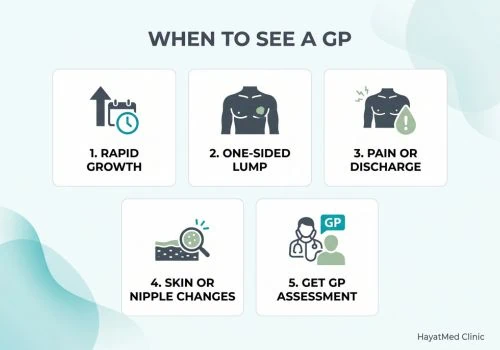
Book a medical assessment for a new or persistent lump, breast or nipple pain, discharge, bleeding, or changes in the skin or nipple. A rapidly changing chest, especially over weeks, should be assessed rather than put through a weight-loss trial first.
These signs deserve particular attention:
- Rapid growth: Noticeable new changes over weeks.
- One-sided lump: A distinct hard area, especially one that does not feel like diffuse chest fat.
- Pain or discharge: Persistent pain, fluid, or blood from the nipple.
- Skin or nipple changes: Dimpling, rash, ulceration, or another new visible change.
Most male breast enlargement is not cancer, but a self-check cannot safely exclude other causes. Neither texture, tenderness, asymmetry, duration, nor the response to exercise can establish a diagnosis by itself. The NHS advises a GP assessment for lumps, discharge or bleeding, and skin changes, and a clinician can decide whether examination or testing is needed.
What Treatments Work When Weight Loss Does Not?
If weight management does not resolve chest enlargement, treatment depends on whether the remaining tissue is gland, fat, or both and whether an underlying cause is present. Observation, a medication review, treatment of another condition, and surgery are different paths, not interchangeable shortcuts.
Non-surgical care
A clinician may recommend monitoring, particularly for pubertal changes, or treating an identified medical cause. A clinician may review drugs such as anti-androgens, heart medications, or ulcer treatments, but any dose, withdrawal, or change belongs to the prescribing clinician. Do not assume that an over-the-counter supplement or a hormone product will remove established gland tissue.
When surgery is considered
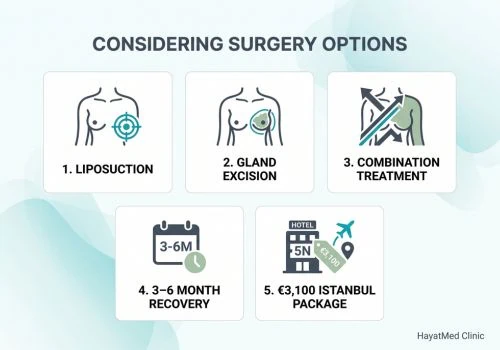
Surgery is an option when breast enlargement remains troublesome and appropriate clinical assessment supports it.
The main surgical approaches remove fatty tissue, gland tissue, or both; gynecomastia liposuction versus gland excision explains the detailed technique decision.
- Liposuction: Can reduce a substantial fatty component, but alone does not remove enlarged breast glands.
- Gland excision: Removes excess gland tissue contributing to persistent enlargement or a puffy areola.
- Combination treatment: May address both gland and fat when the clinical examination shows a mixed pattern.
A broad gynecomastia surgery overview explains candidacy and the overall surgical pathway. The 3–6-month estimate for swelling to settle and the final contour to emerge is a commonly reported range, not a guarantee; a surgeon confirms an individual recovery course. The American Society of Plastic Surgeons’ recovery information describes postoperative swelling, support garments, and individual follow-up but does not establish that exact range as a fixed rule.
For patients considering treatment in Turkey after clinical assessment, HayatMed’s listed gynecomastia surgery price starts at €3,100. Its package includes 5 hotel nights and its typical Istanbul stay is 5 to 7 nights, with the treating team confirming the individual itinerary. Detailed prices and inclusions sit in the gynecomastia surgery cost breakdown.
What Is the Best First Step for a Flatter Chest?
Start by identifying whether excess fat may be contributing, then choose an appropriate weight-management plan or clinical assessment. If there is firm gland-like tissue, distressing persistence, or a warning symptom, relying on more chest workouts alone may delay useful care.
For mainly fatty fullness, consider an 8–12-week trial of sustainable diet and exercise when suitable. For persistent gland-like enlargement, discuss causes and options with a clinician before deciding on treatment. Any new, hard, painful, one-sided, or rapidly changing finding deserves medical review regardless of your fitness plan.


