
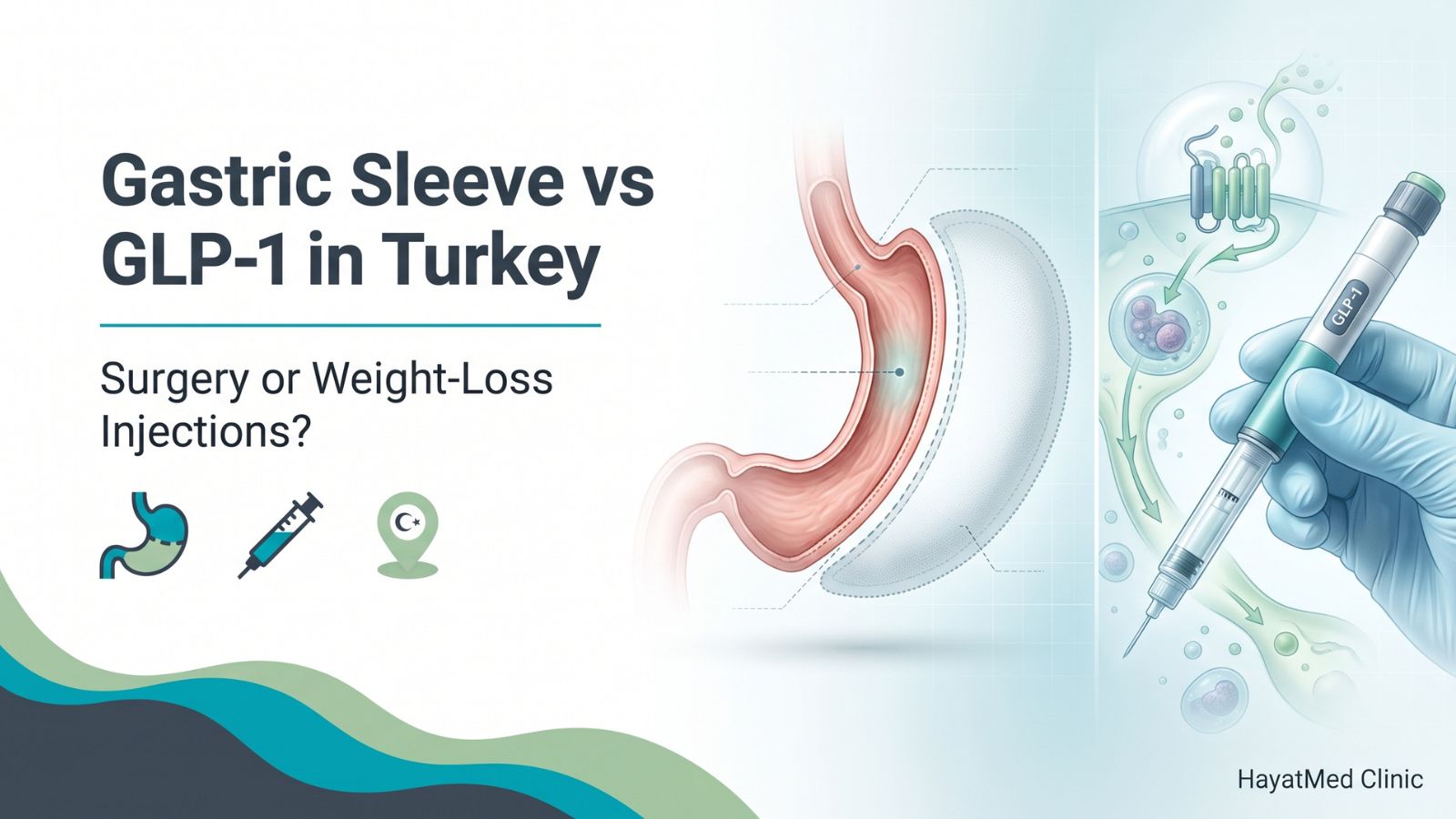
Gastric sleeve vs GLP-1 in Turkey is a choice between permanent stomach-reduction surgery and medically supervised, non-surgical treatment. For UK patients, eligibility, expected weight loss, potential regain and ongoing care shape the decision.
At HayatMed in Istanbul, gastric sleeve surgery starts from €3,000, including two hospital nights and five hotel nights. Patients usually plan their return after the final assessment during the seven-night stay, but the UK CAA advises avoiding air travel for 10 days after abdominal surgery. Extra hotel nights may therefore be needed at your own cost.
Gastric sleeve vs GLP-1 in Turkey: the decision in brief
Gastric sleeve surgery permanently reduces stomach size, while GLP-1-based medicines influence appetite and food intake without removing stomach tissue. Both can support substantial weight loss, but their risks, treatment duration and follow-up requirements differ.
A gastric sleeve removes approximately 80% of the stomach and cannot be reversed. Semaglutide, sold for weight management as Wegovy, acts on GLP-1 receptors. Tirzepatide, used for weight management as Mounjaro in the UK, acts on both GIP and GLP-1 receptors.
Option How it works Main consideration Continuing care
Gastric sleeve Permanently removes much of the stomach Operation, recovery and permanent anatomical change Lifelong nutritional monitoring
Semaglutide (Wegovy) GLP-1 medicine that reduces appetite and food intake Non-surgical, but benefits may diminish after stopping Prescriber-led reviews and ongoing treatment decisions
Tirzepatide (Mounjaro) Dual GIP/GLP-1 medicine affecting appetite and food intake Non-surgical, with its own eligibility and adverse effects Prescriber-led reviews and ongoing treatment decisions
Patients who prefer to avoid surgery may favour medication when clinically suitable. People eligible for bariatric surgery may value its durable anatomical effect, provided they can commit to lifelong follow-up.
Our gastric sleeve treatment in Turkey page explains the operation. The gastric sleeve pros and cons guide explores its trade-offs.
Who is eligible for a gastric sleeve or GLP-1 treatment?
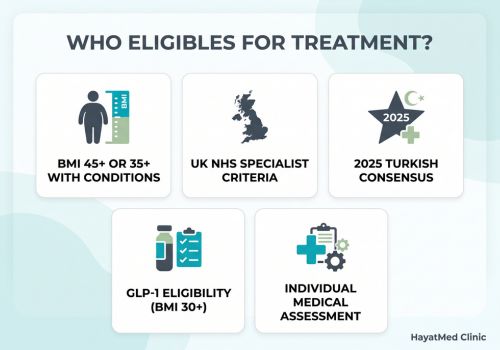
In England, bariatric assessment generally starts at BMI 40, or BMI 35 with a significant weight-related condition. NHS medicine access follows different criteria. Medical history, previous treatment and individual risks also influence suitability.
The NICE surgery guidance supports specialist referral at these BMI thresholds. Some people qualify for assessment at lower thresholds, particularly in specific diabetes or ethnicity-related circumstances.
A 2025 Turkish multidisciplinary consensus considers surgery at BMI 40 or above, or BMI 35 to 39.9 with clinically important obesity-related effects. Selected people with BMI 30 to 34.9 and severe metabolic disease may also qualify for assessment.
NICE’s general tirzepatide recommendation covers certain adults with BMI 35 or above and at least one weight-related condition. NHS England access is being phased in more narrowly.
Wegovy is licensed for adults with BMI 30 or above, or BMI 27 with a weight-related condition. NHS Wegovy access generally requires BMI 35 or above with a weight-related condition, with selected BMI 30 to 34.9 cases in specialist care.
Medication licensing, clinical suitability and NHS funding are separate questions. A licensed prescriber assesses medicine contraindications, side effects and continuing care. For surgery, the bariatric and anaesthetic teams assess operative suitability and the ability to follow the postoperative programme.
Weight-loss results and regain: what studies actually show
Separate studies report about 25% to 30% total-body-weight loss after sleeve surgery and around 15% with semaglutide. The study populations and follow-up periods differ.
These figures are averages, not predicted results for an individual. The tirzepatide trial studied adults with obesity or overweight without diabetes, alongside lifestyle support.
A 2026 review pooling sleeve and bypass studies associated bariatric surgery with 18.15 percentage points more weight loss than GLP-1 medicines. The observational studies were highly heterogeneous. A separate 2026 indirect analysis estimated similar weight-loss efficacy for sleeve surgery and higher-dose tirzepatide.
Regain also matters. In a semaglutide follow-up study, participants regained roughly two-thirds of their earlier treatment-associated weight loss within one year of stopping the medicine. That finding concerns semaglutide in one study, not every weight-loss injection.
Regain can happen after sleeve surgery too, despite the permanent change to stomach size. Long-term nutrition, activity and clinical follow-up remain important for both approaches.
From injections to surgery: duration, risks and long-term follow-up
Patients can move from prescribed injections to surgery after a specialist assessment, and medicines may sometimes be used again after bariatric surgery.
A prescriber can review whether to continue or adjust GLP-1-based treatment. Stopping treatment may lead to renewed weight gain. Gastric sleeve permanently changes anatomy and requires lifelong nutritional monitoring, including supplements and blood tests.
Different risks need different responses
Gastric sleeve risks include bleeding, infection, blood clots and leakage from the stomach staple line. It can also cause new or worse acid reflux. Medicines commonly cause digestive side effects, and UK regulators warn of rare but serious acute pancreatitis.
Severe, persistent abdominal pain during GLP-1 treatment requires urgent medical assessment. After surgery, severe abdominal pain, chest pain, severe breathlessness or major bleeding require emergency services or A&E.
Fever, a sustained fast heartbeat, worsening leg pain or swelling, or repeated vomiting require urgent clinician or NHS 111 assessment. The NHS complications guide explains potential postoperative problems.
Taking injections before an operation
A 2024 multi-society guidance statement says most patients can continue GLP-1 medicine before elective surgery after individual assessment. Delayed stomach emptying may affect aspiration risk under anaesthesia. The surgeon, anaesthetist and prescribing clinician decide whether special preparation, such as a 24-hour liquid diet, is needed.
Do not independently start, stop or change weight-loss medicine around an operation. Our surgeons and anaesthetists review your current medicines during the surgical assessment.
HayatMed gastric sleeve package and cost in Turkey
HayatMed gastric sleeve surgery in Istanbul starts from €3,000, with two hospital nights and five hotel nights included. This is a seven-night standard package, with a final postoperative assessment during the included stay.
The package includes:
- Gastric sleeve surgery, necessary preoperative tests and postoperative medicines.
- Two nights in a JCI-accredited partner hospital in Istanbul.
- Five hotel nights with breakfast accommodation for two people.
- Medical consultations, examinations and follow-up checks.
- Airport and hospital-hotel transfers, plus multilingual assistant support.
- Twelve months of remote follow-up with the treating team and 24/7 on-call support.
Flights and extra accommodation are not included. HayatMed bariatric team has more than 10 years of experience and has performed more than 5,000 procedures.
For UK price context, Practice Plus Group Barlborough lists £8,799 plus a £145 consultation. Ramsay Health Care lists gastric sleeve surgery from £10,495, including 24 months of aftercare.
Other clinics in Turkey advertised primary gastric sleeve surgery from about €2,800 to €4,000 in September 2026, with different inclusions. For a more detailed breakdown, see our gastric sleeve cost in Turkey guide.
UK aftercare and flying home after sleeve surgery
After gastric sleeve surgery in Istanbul, UK patients need lifelong nutritional follow-up and should avoid flying for 10 days under CAA guidance. Our usual seven-night stay includes recovery checks, but it is shorter than this precaution.
The UK Civil Aviation Authority advises avoiding air travel for 10 days after abdominal surgery. Patients generally plan to return after their final check during the included seven-night stay.
Staying longer may be safer, and extra hotel nights are at your own cost. Travel should follow a postoperative medical assessment.
Arrange ongoing bariatric care in the UK for nutritional blood tests, supplements, symptom review and weight-management support. HayatMed provides 12 months of remote follow-up, but that does not replace local lifelong monitoring. Our gastric sleeve diet guide explains the dietary stages after surgery.
If you are still comparing surgical treatments, see our overview of weight-loss surgery in Turkey and the separate gastric sleeve versus bypass comparison.


