
Composite veneers in Turkey may suit adults who want to improve small chips, gaps, uneven edges, mild shape differences or selected colour concerns with tooth-coloured resin. They are not automatically the right option for every cosmetic problem, and they should not be chosen on price or the idea that they are always “reversible.”
The useful decision is whether composite resin fits your teeth, bite, cosmetic goal, and maintenance expectations better than alternatives such as porcelain veneers, orthodontic treatment, whitening or a smaller bonding repair. A dentist should assess oral health and the bite before confirming treatment.
Should You Choose Composite Veneers?
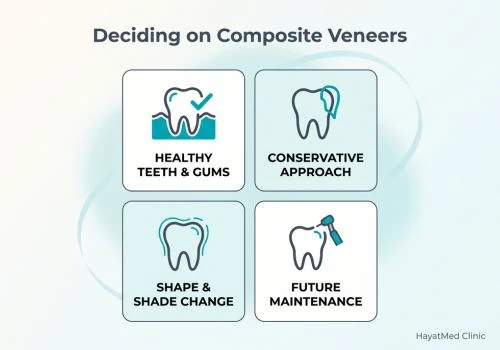
Composite veneers can be a reasonable option when the cosmetic change is relatively conservative, and the teeth and gums are healthy. They may be especially relevant when repairability, a lower initial treatment cost, or a potentially more conservative preparation approach matters to you.
They are less attractive when you want maximum resistance to staining and wear, when the bite places heavy forces on the front teeth, or when the underlying problem needs orthodontic or restorative treatment rather than surface masking.
A good decision therefore starts with four questions:
- Are the teeth and gums healthy enough for cosmetic treatment?
- Can composite achieve the shape and shade change you want without creating an over-contoured result?
- Is your bite or grinding habit likely to increase chipping or wear?
- Are you comfortable with future polishing, repair or replacement if the material changes over time?
What Composite Veneers Can and Cannot Change
A composite veneer covers most or all of the visible front surface of a tooth with tooth-coloured resin. It can change visible shape, proportion and colour and may help mask small chips, spaces or mild irregularities.
Composite veneers do not treat active decay or gum disease, and they do not correct the underlying position of significantly misaligned teeth. If a bite problem, tooth damage or disease is the main issue, the dentist may recommend another treatment first.
The amount of tooth preparation also varies. Composite veneers may require less enamel removal than porcelain veneers in some cases, but patients should not assume that every composite case is no-prep or fully reversible. The American Dental Association advises that veneer treatment is not reversible when enamel is removed.
Composite Veneers vs Composite Bonding
Composite bonding and composite veneers use similar tooth-coloured resin, but the treatment scope is different.
Composite bonding usually targets a limited defect such as a chipped corner, a small gap or a local shape problem. A composite veneer uses resin across a larger part of the visible tooth surface to create a broader cosmetic change.
That distinction matters because a small defect may not need a full veneer. Preserving sound tooth structure should remain part of the treatment decision rather than automatically increasing the number or coverage of restorations.
Composite vs Porcelain: The Decision Points That Matter
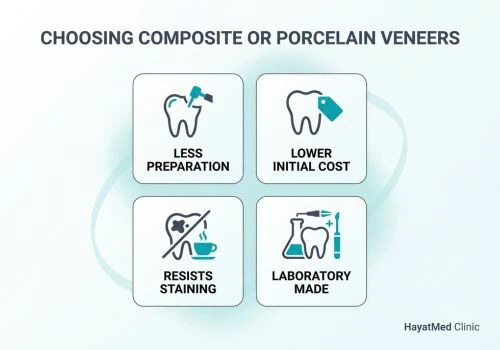
Composite and porcelain veneers can address overlapping cosmetic goals, but neither material is universally better.
Composite may offer:
- less tooth preparation in selected cases;
- direct chairside placement for many cases;
- easier local repair if a small area chips;
- a lower initial market price than laboratory-made ceramic veneers.
Porcelain may offer:
- greater resistance to staining and wear;
- highly stable surface gloss and colour;
- a laboratory-made restoration when that approach better suits the treatment plan.
The trade-off is not simply “cheap versus premium.” A patient who prioritises repairability and a conservative resin approach may prefer composite, while someone whose main priority is long-term colour and surface stability may be advised to consider ceramic. The appropriate material depends on the condition of the teeth, the bite, how much preparation is needed and the cosmetic result being planned.
Who May Be a Suitable Candidate?
Composite veneers are generally considered only after a dentist checks the teeth, gums and bite.
They may be considered for adults with:
- healthy teeth and gums;
- minor chips, small gaps or shape differences;
- selected discolouration that is appropriate for masking;
- realistic expectations about staining, wear and maintenance;
- a bite that does not place excessive stress on the restorations.
Extra caution is needed when there is untreated decay or gum disease, significant tooth damage, a deep overbite, or clenching and grinding. The ADA notes that people who clench or grind their teeth, or who have a deep overbite, may not be good veneer candidates.
Severe crowding or misalignment should not be disguised without considering whether orthodontic treatment is more appropriate. Likewise, a heavily restored or structurally weakened tooth may need a different restorative plan.
How Composite Veneers Are Placed
The exact workflow depends on whether the dentist plans a direct or indirect composite technique and on the condition of the teeth.
With direct composite veneers, the dentist prepares the tooth as needed, applies bonding materials, layers and sculpts the resin, hardens it with a curing light, and then finishes and polishes the surface. The ADA describes this as a preparation, bonding, sculpting, curing and polishing process.
Indirect composite veneers are made outside the mouth before being bonded to the tooth. They involve a different workflow, so the number and timing of visits should be confirmed from the treatment plan rather than assumed from a generic travel schedule.
After placement, the dentist should check the bite and comfort. If the bite feels wrong after treatment, it should be reassessed rather than ignored.
Durability, Staining and Repair
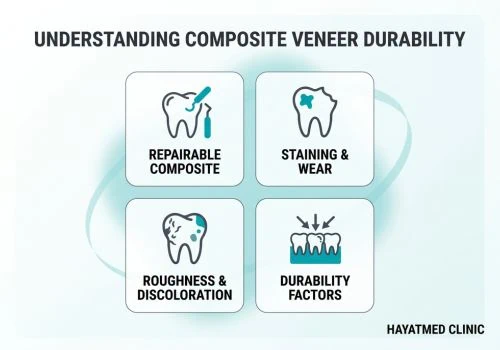
Composite veneers are repairable, but they are not maintenance-free. The material is generally less resistant to staining and wear than porcelain, and it can chip, roughen, discolour or require repair over time.
A 2023 systematic review and meta-analysis of resin composite laminate veneers found an 88% pooled survival rate in the included randomised trials, with mean follow-up periods ranging from 24 to 97 months. Surface roughness, colour mismatch and marginal discolouration were among the most frequently reported complications. The evidence does not support treating one fixed number of years as a guaranteed lifespan for every patient.
Durability is influenced by the bite, grinding or clenching, the size and design of the restoration, oral hygiene, habits and how the restoration is maintained. A small chip may sometimes be repaired without replacing the entire veneer, which is one practical advantage of composite.
To reduce avoidable damage, maintain normal brushing and interdental cleaning, avoid using veneered teeth to bite hard objects, and tell your dentist if you notice a rough edge, movement, chipping or a bite that feels different. Coffee, tea and red wine can contribute to visible staining of composite surfaces over time.
Composite Veneers Cost in Turkey
Composite veneer pricing in Turkey varies widely, so a single headline package should not be treated as a standard price.
HayatMed’s September 2026 veneer-cost review summarised current published Turkish composite prices at roughly £80–£250 per tooth. This is a market-planning range, not a HayatMed Clinic price and not a guaranteed quote.
The final cost can change with:
- the exact number of teeth treated;
- whether the plan uses direct or indirect composite;
- tooth and gum health;
- bite complexity and any treatment needed first;
- diagnostics and clinical reviews;
- what the written quote includes or excludes.
For this reason, compare treatment plans rather than multiplying a “per tooth” number without checking what each provider is actually proposing. A composite-specific page should help you understand the material decision; a full market comparison of veneer prices belongs in a dedicated veneer-cost guide.
Planning Composite Veneers in Turkey Safely
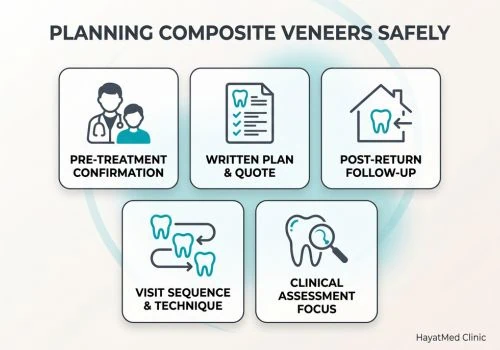
Treatment abroad adds practical questions that do not arise from the material alone. Before booking, confirm who will perform the treatment, what examination is required, how the final number of teeth will be decided, what happens if the in-person assessment changes the plan, and how follow-up is handled after you return home.
Ask for a written treatment plan and itemised quote. It should identify the restoration planned for each tooth, the number of teeth, what diagnostics and reviews are included, any treatment that may be needed first, aftercare arrangements, and any separate travel services.
Do not rely on a fixed “3–5 day” schedule until your own plan confirms the technique, visit sequence and review timing. Direct and indirect composite workflows are different, and clinical findings can change what is appropriate.
If you are comparing clinics in Istanbul or elsewhere in Turkey, location should remain supporting context rather than a substitute for clinical assessment, material choice, follow-up planning and a clear written quote.


