
Dental tourism in Turkey can combine dental treatment with an organised trip, but the right plan depends on the procedure and the findings from your dental assessment. At HayatMed, veneers start from €175 per tooth, crowns from €150 per tooth, dental implants from €450 per implant, and teeth whitening from €500. Veneer and crown packages include 5 hotel nights; implant plans include 5 to 10 hotel nights depending on the treatment plan.
For international patients, the key planning questions are treatment suitability, the exact procedure planned, the itemised cost, time in Istanbul, aftercare, and what happens if a complication occurs after returning home. Some implant cases are staged, so the final number and timing of visits should be confirmed after clinical assessment and imaging.
Dental Treatment Prices: Turkey vs. the UK, US, and Australia
The table below offers a general comparison. Actual fees depend on the selected materials, the number of teeth involved, diagnostic imaging, and treatment complexity.
Treatment Turkey UK US Australia
Single Porcelain Veneer $200–$500 £600–£1,200 $900–$2,500 AUD 660–AUD 1,825
Full Set (16 Veneers) $3,200–$8,000 £9,600–£19,200 $14,400–$40,000 AUD 10,560–AUD 29,200
Single Dental Implant $500–$800 £2,000–£2,500 $3,000–$4,500 AUD 3,000–AUD 5,000
Full Mouth Restoration $8,000–$15,000 £32,000–£48,000 $40,000–$60,000 AUD 40,000–AUD 60,000
Numbers snapshot: A full veneer set may cost $3,200–$8,000 in Turkey versus $14,400–$40,000 in the US. Single implant costs typically range from $500–$800 in Turkey before the permanent crown.
What Dental Packages Include vs Common Exclusions
Typically included:
- Consultation and diagnostic imaging
- Tooth preparation and provisional restorations
- Final restorations and fitting adjustments
- Follow-up appointments during your stay
- Airport transfers and hotel accommodation when included in the written package
Often excluded:
- International flights
- Extended hotel nights beyond the standard package
- Travel or medical insurance
- Additional treatments discovered after examination
- Personal expenses and meals outside the hotel breakfast
Request an itemised written quote before committing. Ask the clinic to confirm which items are covered and which carry extra charges.
At HayatMed, dental package details depend on the treatment. Confirmed dental packages can include the procedure, examination and treatment planning, diagnostic imaging when clinically needed, scheduled check-ups during the stay, private transfers, English-speaking assistance, 12 months of remote follow-up and 24/7 on-call dental support. Veneer and crown packages include 5 hotel nights, while implant packages include 5 to 10 hotel nights depending on the treatment plan.
Clinician-led planning
Remote planning can begin with relevant dental photographs or records, but the definitive plan should follow an in-person assessment and any investigations the clinician considers necessary. Based on your goals, anatomy, medical history, and risk factors, the team explains whether the procedure is appropriate and outlines the steps, expected timeline, and aftercare plan.
Clinical standards
Procedures should be carried out in licensed clinical settings with documented infection-control processes and clear escalation pathways for complications. Before you confirm, ask who will perform each step, what monitoring is used, and how follow-up is handled once you return home.
Transparent quotes
A reliable quote itemises what is included and what is optional, for example consultations, tests or imaging where relevant, medications, accommodation, transfers, and follow-up. This helps you compare like-for-like, because package inclusions and aftercare policies can vary between providers.
Understanding Dental Tourism in Turkey
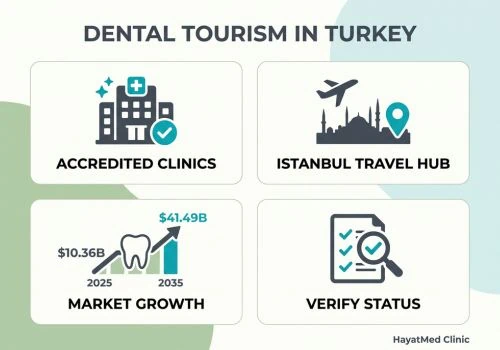
Some healthcare organisations in Turkey are accredited by the Joint Commission International (JCI). Istanbul is a popular hub for international dental travel due to its flight connectivity and clinic availability.
The global dental tourism market reached $10.36 billion in 2025, with projections suggesting it will grow to $41.49 billion by 2035. This expansion reflects rising demand for affordable cosmetic and restorative care alongside growing confidence in international treatment standards.
Not all clinics hold JCI accreditation. Patients can verify a clinic’s status through the JCI-accredited organisations list before booking.
Why Patients Choose Dental Care Abroad
Financial savings remain the primary motivation. In the United States, nearly 21% of adults aged 20–64 have untreated tooth decay, according to CDC cavity facts. Dental benefits coverage varies; the ADA Health Policy Institute estimates that among adults aged 19–64, 62% have private dental benefits, 16% have public dental benefits, and 22% have no dental benefits.
Common reasons patients consider Turkey:
- Cost reduction: Savings of 60–70% compared with Western countries, even after travel expenses
- Shorter waiting times: Treatment completion in days rather than weeks or months
- Modern technology: CAD/CAM systems, digital smile planning, and 3D imaging
- Combined experience: Cultural exploration in Istanbul during recovery
- Material quality: Many clinics use the same implant brands found in Western practices, such as Straumann, Nobel Biocare, and Bego
Porcelain Veneers in Turkey: Timeline and Process
Porcelain veneers typically require 5–7 days from consultation to final bonding. The exact schedule still depends on preparation, laboratory work, fit checks and any adjustments. At HayatMed, the current veneer package includes 5 hotel nights. Dental veneers are thin shells that bond to the front surfaces of teeth, addressing discolouration, chips, gaps, minor misalignment, and size differences. Materials include lithium-disilicate (E-Max) and premium porcelain.
Veneer Treatment Timeline: Days 1–7
Days Stage What Happens
1–2 Assessment and preparation Consultation, digital scans, tooth preparation, temporary veneers if needed
3–4 Laboratory stage Fabrication, quality checks, colour matching
5–7 Final fitting Permanent veneers bonded, final adjustments, polishing, aftercare explained
Numbers snapshot: Most patients complete veneer treatment within 5–7 days. HayatMed’s current veneer package includes 5 hotel nights. Exact appointment timing depends on the treatment plan. Because enamel thickness in incisors can be only 0.3–0.5 mm in the gingival third, veneer preparation should remain extremely conservative in that area.
A 2024 narrative literature review reported that dental veneers generally have a high survival rate (often above 90% for more than 10 years), with outcomes varying by enamel preservation, material choice, bite forces, and oral hygiene.
Digital smile design technology lets patients preview expected results before treatment begins. Discuss realistic expectations with your dentist, as individual outcomes differ.
Dental Implants in Turkey: What to Expect
Dental implant treatment is often staged because the titanium post needs time to fuse with the jawbone through the osseointegration healing phase. At HayatMed, the typical Istanbul stay for implant treatment is 5 to 10 nights depending on complexity. Some plans require a later visit after healing, so the treating dentist should confirm the final schedule for your case. For patients replacing a complete arch, the All-on-4 dental implant procedure has its own planning and restoration stages.
Implant Type Suited For Timeline
Single Implant Replacing one missing tooth Placed in one visit; 3–6 months healing before final crown
All-on-4 Full arch replacement, often without bone grafts Placed in one visit with temporary teeth; return visit for permanent restoration
All-on-6 Full arch with added stability Same as All-on-4
Bone Graft Building bone when volume is insufficient 3–6 months healing before implant placement
Numbers snapshot: Single implants cost $500–$800 in Turkey. Healing takes 3–6 months before the permanent crown can be fitted.
According to the American Dental Association, successful integration depends on bone quality, patient health, and compliance with aftercare. Smokers and those with uncontrolled diabetes may face higher complication rates.
Trip Planning for Dental Treatment
- Veneers and crowns: HayatMed’s current packages include 5 hotel nights; the clinical appointment sequence still depends on the treatment plan.
- Dental implants: Plan an initial visit of 3–5 days, then a return visit of 3–5 days after 3–6 months of healing. HayatMed’s current implant plans include 5 to 10 hotel nights depending on complexity; the treating dentist should confirm the final schedule for your case.
- Whitening: confirm the appointment schedule and any aftercare requirements in the written treatment plan before booking travel.
Alternative Dental Treatments: Bonding and Whitening
Composite bonding repairs minor chips, cracks, and gaps in a single visit. Costs in Turkey typically fall in the low hundreds of dollars per tooth, depending on complexity.
Professional teeth whitening uses clinical-grade solutions to reduce staining. Results vary based on the type and depth of discolouration.
Some patients who expect veneers find that whitening combined with targeted bonding achieves their goals at a lower cost and with less tooth alteration. A thorough consultation helps determine which approach suits your needs.
Quality and Safety Standards for Dental Clinics
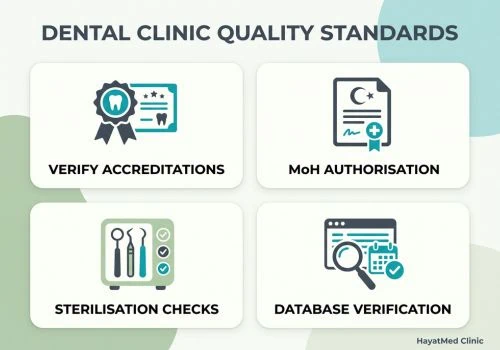
Some facilities serving international patients are JCI-accredited, while others rely on other certifications or internal protocols; accreditation status should be verified for each facility. The Ministry of Health requires an International Health Tourism Authorisation Certificate for facilities and intermediary organisations offering international medical tourism services.
Accreditations to verify:
- JCI (Joint Commission International): Recognised globally for healthcare quality
- ISO standards: International quality management systems
- Turkish Ministry of Health certification: Required for medical tourism services
- Professional memberships: International dental associations and speciality boards
Ask the clinic how instruments are sterilised and how the process is monitored. International guidance on reprocessing medical devices recommends using sterilisation monitoring indicators, including mechanical, chemical, and biological checks. If a clinic cannot clearly explain its reprocessing and monitoring steps, treat that as a red flag.
Not every clinic holds these credentials. Verify accreditation status through official databases before booking.
Dental Treatment Risks and Complications
All dental procedures carry risks, regardless of location. A 2022 British Dental Association survey found that 95% of responding UK dentists had examined patients who travelled abroad for dental treatment, and of those, 86% said they had treated cases that developed complications.
Complication How Often Reported Common Causes Risk Reduction
Treatment failure Commonly seen Poor materials, inadequate technique Verify accreditation and dentist experience
Post-treatment pain Frequently reported Infection, nerve involvement, poor fit Ensure proper sterilisation and conservative preparation
Work needing correction Often requires follow-up Rushed procedures, insufficient skill Allow adequate treatment time; check credentials
Numbers snapshot: BDA reporting from 2022 found 86% of UK dentists had treated complications from overseas dental work. Proper veneer preparation removes only 0.3–0.5 mm of enamel.
A primary concern involves how much natural tooth structure is reduced before placing restorations. Veneers are typically more conservative than full dental crowns, which generally require greater reduction because they cover the entire tooth. Before treatment, confirm in writing whether each tooth is planned as a veneer or a full crown, the material to be used, and any alternatives if a less invasive option is clinically suitable.
When to Seek Urgent Dental Care
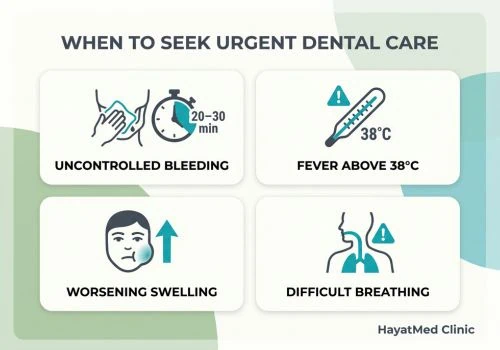
Contact a local dentist or urgent care provider if you experience any of the following after treatment:
- Uncontrolled bleeding that does not stop with gentle pressure after 20–30 minutes
- Fever above 38°C (100.4°F)
- Swelling that worsens after 48–72 hours rather than improving
- Severe pain not relieved by prescribed medication
- Signs of infection, such as pus, foul taste, or increasing redness
- A bite that feels suddenly misaligned after a restoration fitting
- Difficulty swallowing or breathing (seek emergency care immediately)
If symptoms are severe or worsening rapidly, seek local urgent care without delay.
Travel Insurance for Dental Treatment in Turkey
Standard travel insurance policies often exclude elective dental procedures and their complications. Coverage varies widely, so review your policy carefully before travelling.
Questions to ask your insurer:
- Does this policy cover emergency dental care while abroad?
- Are complications from elective dental procedures covered?
- What happens if I need to extend my trip due to a medical issue?
- Does the policy cover hospitalisation related to dental complications?
- Will return travel costs be covered if I cannot fly as scheduled?
- Are there waiting periods or exclusions for pre-existing conditions?
Some insurers offer add-on coverage for medical tourism. Compare options and read the fine print. This information is general guidance, not legal or insurance advice.
Choosing a Dental Clinic in Turkey
Selecting a provider requires research beyond price comparisons. A 2022 BDA report found that 86% of UK dentists reported treating cases that developed complications after dental treatment abroad.
Quality indicators:
- Independent accreditation from JCI or ISO
- Board-certified dentists with documented specialist training
- Modern equipment, including digital imaging, CAD/CAM, and 3D scanners
- Transparent pricing with written treatment plans
- Consistent positive feedback across multiple independent review platforms
Warning signs:
- Prices that are substantially below typical market ranges for the same material and lab work, especially if the clinic will not provide an itemised written quote.
- Pressure to book quickly
- Reluctance to share credentials or accreditation
- No written aftercare or follow-up protocols
Documentation to Request Before Treatment
- Written treatment plan specifying procedures and preparation methods
- Materials and brands to be used (with lot numbers if possible)
- Summary of diagnostic imaging
- Aftercare instructions in your language
- Warranty terms in writing
How to Evaluate Dental Clinic Reviews
- Look for consistency across platforms (Google, Trustpilot, independent medical tourism sites)
- Note mentions of long-term follow-up and how issues were resolved
- Be cautious of reviews that seem overly uniform or lack detail.
- Check whether before-and-after photos appear realistic and varied.
Planning Your Dental Trip to Istanbul
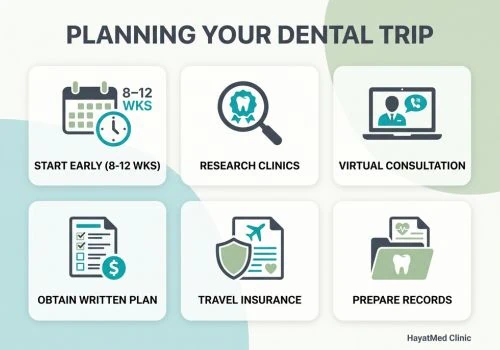
Preparation should begin 8–12 weeks before travel. This allows time for thorough clinic research and any preliminary treatments.
Step-by-step checklist:
- Research clinics and verify JCI accreditation through official databases
- Check the dentist’s credentials and professional memberships.
- Schedule a virtual consultation; submit dental photographs and recent X-rays
- Obtain a written treatment plan with itemised pricing and a timeline.
- Arrange travel insurance and confirm coverage for dental complications.
- Book flights only after the treatment schedule is confirmed, and verify whether hotel accommodation is included in your package
- Prepare medical records, including current medications, allergies, and previous dental work.
Typically Included in Packages Often Extra
Dental procedures and materials Flight tickets
Provisional restorations Extended hotel stays
Airport transfers and local transport Personal shopping or tours
Hotel accommodation according to the written package Additional treatments discovered after examination
Follow-up appointments during your stay Travel insurance
Aftercare supplies Meals outside hotel breakfast
Numbers snapshot: At HayatMed, current dental packages include 5 hotel nights for veneers and crowns and 5 to 10 hotel nights for implant plans, depending on treatment. Begin planning early enough to obtain records and a written treatment plan before booking travel.
Turkey vs Other Dental Tourism Destinations
Several countries compete in the dental tourism market. Each offers distinct advantages depending on your location and treatment needs.
Destination Typical Savings Flight Time from UK Notable Feature
Turkey 60–70% 3–4 hours Large number of clinics serving international patients; some facilities are JCI-accredited (verify in the JCI “Find Accredited International Organizations” directory)
Hungary 50–60% 2–3 hours EU regulatory standards
Mexico 40–60% 10–12 hours (from US) Proximity for North American patients
Thailand 50–65% 11–13 hours Combined wellness and dental tourism
Numbers snapshot: Turkey offers 60–70% savings with 3–4 hour flights from the UK. Hungary provides savings of 50–60% compared to EU standards.
Turkey’s advantages include a large number of clinics serving international patients, a strategic location between Europe and the Middle East, and government support through the HealthTürkiye portal.
Dental Aftercare and Recovery Timeline
Proper aftercare influences how long results last. Follow these guidelines to support healing and reduce the risk of complications.
Essential aftercare steps:
- Follow the diet instructions given by your treating dentist; softer foods may be advised during early healing
- Use a soft-bristle toothbrush twice daily with gentle technique
- Attend all scheduled appointments before leaving Turkey
- Avoid smoking during healing, especially after implants
- Wear a night guard if you grind your teeth during sleep
Timeframe What to Expect What to Do
First 48 hours Mild sensitivity, slight swelling Soft diet, prescribed medication, ice packs as directed
Days 3–7 Healing progresses, provisionals feel more comfortable Continue soft foods, gentle cleaning, attend follow-up
Weeks 2–4 Gums healing, restorations settling Gradually return to normal diet, maintain oral hygiene
Months 3–6 Implants integrating with bone (if applicable) Return for permanent restoration placement
Every 6 months Long-term maintenance Professional cleaning with your home dentist
Numbers snapshot: Follow the diet and hygiene instructions given by your treating dentist. Schedule a home dentist visit within 2–4 weeks of returning and share your treatment records.
Documents to Take Home After Dental Treatment
- Treatment summary and procedure notes
- Diagnostic imaging (X-rays, scans)
- Materials used, including brand names and lot numbers where available
- Laboratory information for custom restorations
- Warranty terms in writing
- Emergency contact details for the treating clinic
Follow-Up with Your Home Dentist
After returning home, schedule an appointment with a local dentist within 2–4 weeks. Share your treatment records so they can monitor healing and address any concerns. Long-term check-up intervals should be set by your dentist based on your treatment and oral health.
According to the American Dental Association, patients who follow aftercare instructions and attend regular check-ups tend to experience fewer complications. Individual healing varies based on overall health, oral hygiene, and whether the patient smokes.


