

HayatMed is a hair transplant clinic in Turkey offering FUE and Sapphire FUE from £1,700, or DHI from £1,900, in Istanbul. Our outpatient packages include three hotel nights with breakfast and one year of remote follow-up. Most patients fly home after their final clinical check at the end of those three nights, provided our team confirms they are fit to travel.
Hair transplant clinic in Turkey: who performs each step?
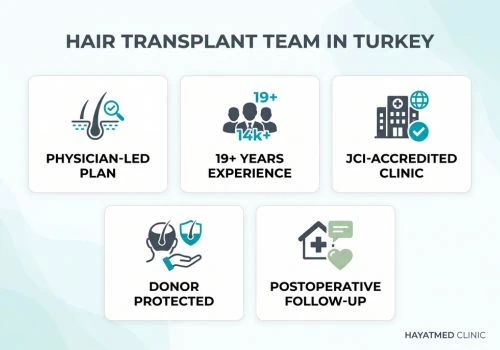
A hair transplant clinic in Turkey should provide physician-led diagnosis, hairline planning, safe donor harvesting, recipient-site creation and postoperative care.
Our hair transplant team has more than 19 years of experience and has performed more than 14,000 procedures. We assess your pattern of hair loss, scalp health and donor supply before planning the number and placement of grafts. We provide treatment in a JCI-accredited partner clinic in Istanbul.
The International Society of Hair Restoration Surgery identifies these clinical decisions and surgical steps as physician responsibilities. A responsible clinic explains who performs each step, protects the donor area from excessive harvesting and provides medical follow-up after the patient returns home.
How much does a hair transplant in Turkey cost?
At HayatMed in Istanbul, FUE and Sapphire FUE start from £1,700, while DHI starts from £1,900.
Technique HayatMed starting price Main distinction
FUE £1,700 Individual follicular units are harvested and placed into prepared recipient sites
Sapphire FUE £1,700 FUE using sapphire-tipped blades to create recipient channels
DHI £1,900 Extracted grafts are placed using an implanter pen
Our standard scalp hair transplant price does not increase with the graft count. The graft plan still depends on the donor area’s safe capacity, hair characteristics and the coverage you need. DHI starts £200 higher than FUE or Sapphire FUE.
Other clinics in Turkey advertised FUE packages from about €1,950 to €2,650 in November 2026, with different hotel and transfer inclusions. In the UK, the NHS lists private hair transplant costs from £1,000 to £30,000, depending on treatment and provider.
For a full breakdown of package prices and comparisons, read our hair transplant cost in Turkey guide.
Is FUE, DHI or Sapphire FUE the right technique?
FUE, DHI and Sapphire FUE are hair restoration options, but the suitable technique depends on donor hair, the recipient area and the treatment plan.
Technique How implantation works When it may be considered
FUE Harvested follicles are placed into prepared scalp channels Larger shaved sessions when donor supply is adequate
Sapphire FUE FUE with sapphire-tipped blades for recipient-channel creation Selected cases where the channel-making approach suits the plan
DHI Follicles are harvested separately, then an implanter pen places the grafts Selected hairline refinement, smaller areas or no-shave approaches
Donor extraction and implantation remain separate stages. No technique is automatically superior for every scalp or hair-loss pattern.
Our guides explain FUE hair transplantation, DHI hair transplantation and the differences between DHI and FUE. For selected patients, a no-shave hair transplant may preserve more of the existing hairstyle.
Who is suitable for hair transplantation?
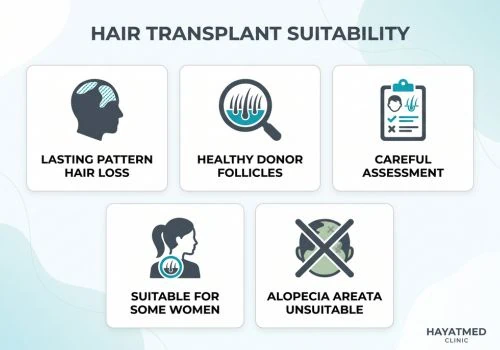
Hair transplantation is mainly suitable for people with lasting pattern hair loss and enough healthy donor follicles to cover the intended area safely.
We assess the cause and stability of hair loss, donor density, scalp condition, medical history and expectations before recommending treatment. The graft-count planning guide explains why a large graft number is not always a better plan.
Some women with pattern or traction-related loss may qualify when the donor region remains suitable; see our women’s hair transplant guide. Alopecia areata is generally unsuitable for transplantation. Ongoing loss of natural hair can also require medical management after surgery. For sparse beard or moustache growth rather than scalp hair loss, a beard transplant in Turkey is a separate treatment option.
What makes a hair transplant clinic in Turkey safe?
Hair transplant safety depends on suitable patients, qualified medical responsibility, sterile clinical practice, conservative donor planning and follow-up.
Temporary swelling, tightness, scabbing and some discomfort are common after surgery. The NHS also describes risks including bleeding, infection, anaesthetic reactions, scarring and transplanted grafts failing to grow.
What you notice What to do
Mild swelling, tightness or scabs that improve Follow the team’s washing and aftercare instructions without picking at grafts
Severe or worsening pain, excessive or persistent bleeding Contact the treating clinic immediately and obtain prompt medical assessment
Severe headache or changes in vision Seek urgent medical assessment and notify the treating clinic
Expanding warm redness, pus or fever Contact the treating clinic urgently and seek same-day medical assessment
Our surgical planning includes donor preservation, infection-control procedures and a clear route for medical help after discharge. For a fuller explanation, read how to assess hair transplant safety.
Three-night Istanbul trip: when can I fly home?
Most HayatMed patients fly home after the final check at the end of their three hotel nights in Istanbul, if our clinical team approves.
The outpatient visit includes preoperative assessment, surgery, initial recovery guidance and a clinical check before departure. The UK Civil Aviation Authority does not specify a universal hair-transplant no-fly period.
Fitness to fly depends on the operation, recovery and individual health. If the final assessment shows that more recovery time is needed, extra hotel nights are at the patient’s expense.
Flights, insurance and expenses outside the package
For flights lasting four hours or longer, prolonged sitting can raise the risk of a blood clot. Move regularly, exercise your legs and stay hydrated. Arrange travel insurance that covers medical care and repatriation, and disclose relevant conditions to the insurer.
New swelling and pain in one leg after travel require urgent medical assessment for possible deep vein thrombosis. Sudden breathlessness, chest pain, collapse or coughing blood may indicate a pulmonary embolism and require immediate emergency care.
What is recovery like after a hair transplant?
After a hair transplant, you may need one to two weeks off work, and grafts need extra care during the first two weeks.
The NHS recovery guidance advises gentle washing according to the treating team’s instructions and limiting strenuous exercise during the first month. Recovery speed depends on the scalp, procedure size and type of work. Do not pick at scabs or apply pressure to new grafts.
When will my hair transplant results show?
The American Academy of Dermatology notes that many patients see results at six to nine months, sometimes later. Full maturation can take longer, as described by the NHS. Transplantation redistributes existing follicles; it does not stop future hair loss elsewhere on the scalp.
Recovery stage What to expect
First two weeks Scabbing and swelling settle; grafts need protection and careful washing
Weeks 2–8 Transplanted hairs often shed while the follicles remain in place
Around month 4 New hair commonly starts to appear
Months 6–9 More growth becomes visible, with continuing changes in density
Around months 10–18 The fuller outcome can be assessed as the transplanted hair matures


How Many Hair Grafts Do I Need?
There is no single graft number that fits everyone. A useful estimate starts with the size and location of the

Female Hair Transplant Turkey Package: Costs, Inclusions, and What to Expect
A female hair transplant package in Turkey typically costs between $2,500 and $5,500, or roughly £2,000 to £4,400, depending on

How Many Grafts for a Beard Transplant in Turkey? Density & Coverage Explained
Beard transplants in Turkey typically use 1,500 to 3,000 grafts to create a natural-looking beard. If you’re asking “How Many